
Introduction
Communication is one of the most important parts of running a successful business.
Every phone call, message, form submission, or inquiry represents a potential opportunity to connect with a customer. Businesses that communicate clearly and respond quickly often build stronger relationships and capture more opportunities.
However, managing communication has become increasingly complex.
Customers now reach out through many different channels:
phone calls
text messages
website forms
online chat
social media
email
Each of these channels requires attention and timely responses.
For many businesses, handling all of these interactions manually has become increasingly difficult.
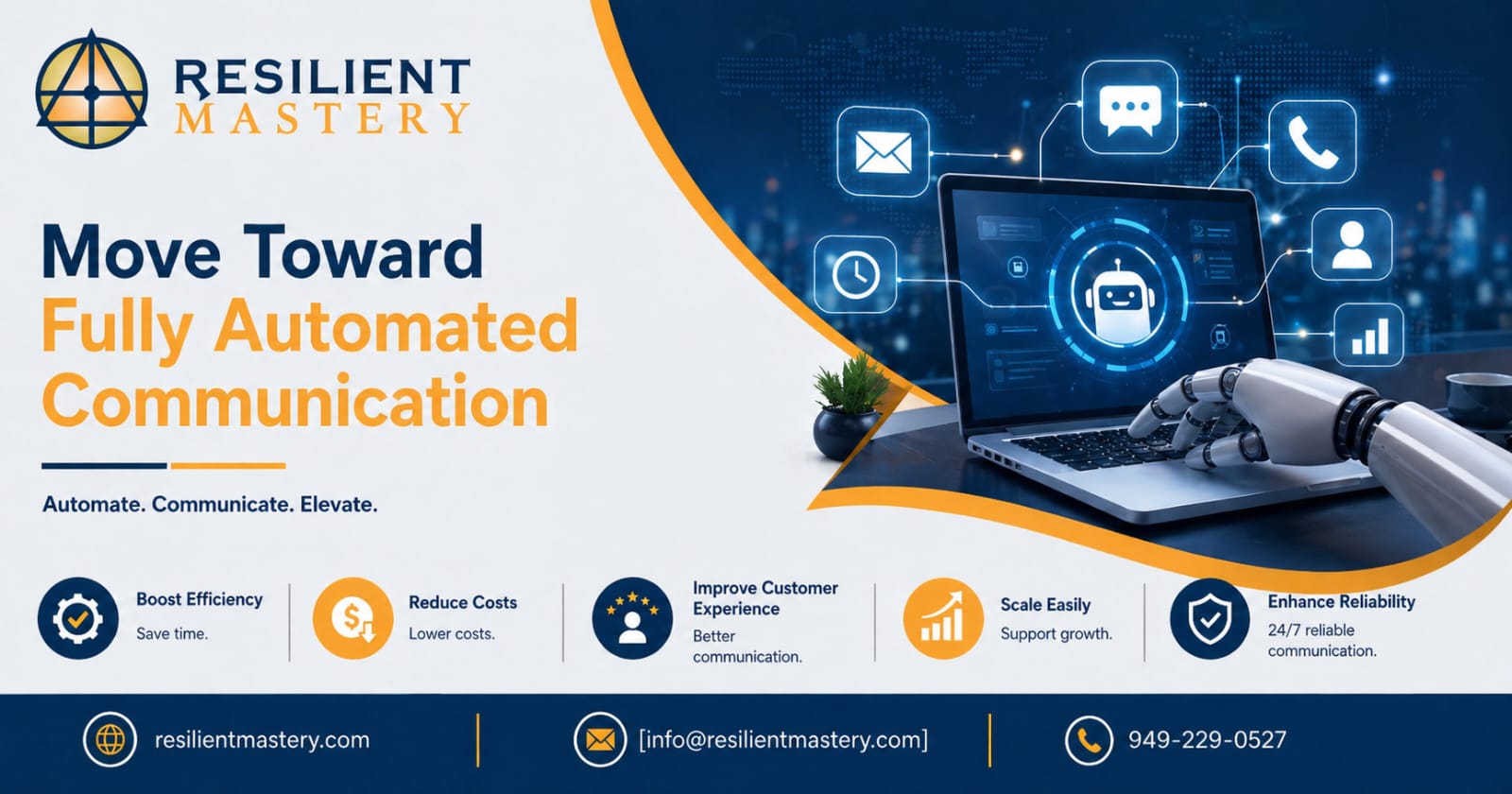
This is one of the reasons why companies are beginning to move toward fully automated communication systems.
These systems help businesses respond quickly, organize inquiries efficiently, and ensure that opportunities are not missed.
The Communication Challenge Facing Modern Businesses
Not long ago, most customer communication happened through phone calls.
Today, customers can reach a business in many different ways. Someone might call in the morning, send a message through a website form in the afternoon, and follow up with a social media message later in the day.
For businesses, this creates a complicated communication environment.
If messages are not tracked properly, some inquiries may be overlooked.
If responses are delayed, customers may move on to another provider.
As communication channels expand, businesses often struggle to keep up with the volume and speed of incoming inquiries.
Why Manual Systems Are Struggling
Many businesses still rely on manual communication systems.
Staff members answer calls when they are available. Messages are checked periodically. Appointments are scheduled individually. Follow-ups are handled manually.
While these processes can work when communication volume is low, they often become difficult to manage as businesses grow.
Manual systems create several challenges:
missed calls when staff are busy
delayed responses to online inquiries
inconsistent follow-up with leads
difficulty tracking conversations across multiple platforms
These challenges can quietly lead to lost opportunities and frustrated customers.
What a Fully Automated Communication System Looks Like
A fully automated communication system connects multiple tools together to manage incoming inquiries more efficiently.
Instead of relying on separate manual processes, automation systems help coordinate communication across all channels.
For example, a modern communication system may include:
AI voice agents that answer incoming calls
missed-call text responses
automated appointment scheduling
lead capture from website forms
CRM systems that track customer interactions
automated follow-up messages
These components work together to ensure that inquiries are handled quickly and consistently.
Capturing Opportunities Instantly
One of the most important advantages of automated communication systems is the ability to respond immediately.
When a customer reaches out, the system can acknowledge the inquiry instantly.
For example:
A missed call can trigger an automatic text message.
A website form submission can immediately generate a response confirming receipt.
An incoming call can be answered by an AI voice agent that gathers basic information.
These quick responses reassure customers that their inquiry has been received and that the business is attentive.
Organizing Customer Information
Another key benefit of automated communication systems is organization.
When inquiries arrive through multiple channels, it can be difficult to keep track of conversations.
Automation systems often integrate with CRM platforms that collect and organize customer information automatically.
This allows businesses to:
track leads more effectively
review past conversations
schedule follow-up communication
manage customer relationships more efficiently
Having a centralized view of customer interactions helps businesses maintain consistent communication and reduce confusion.
Improving Response Speed
As discussed in previous articles in this series, response speed plays a major role in customer decision-making.
When businesses respond quickly, they are more likely to capture the opportunity.
Fully automated communication systems help improve response speed by eliminating delays between inquiry and response.
Instead of waiting for staff to notice a message or return a call, the system responds immediately.
This responsiveness helps businesses maintain strong first impressions with potential customers.
Supporting Growing Businesses
As companies grow, communication volume often increases significantly.
More customers means more calls, messages, and scheduling requests.
Without automation, managing this volume can require additional staff and administrative effort.
Automation systems allow businesses to scale their communication capacity without dramatically increasing workload.
By handling repetitive tasks automatically, these systems allow teams to focus on higher-value work such as customer service and business development.
Strengthening Customer Experience
Customers appreciate businesses that communicate clearly and efficiently.
When inquiries are handled quickly and consistently, customers feel valued and supported.
Automated communication systems help ensure that customers receive timely responses, even during busy periods.
By reducing delays and improving organization, these systems contribute to a smoother customer experience.
Over time, this can lead to stronger relationships, positive reviews, and increased customer loyalty.
The Future of Business Communication
As technology continues to advance, communication systems will likely become even more integrated and intelligent.
Businesses are beginning to combine automation tools, AI communication systems, and CRM platforms to create streamlined operational systems.
Companies that adopt these systems early may be better positioned to manage growth and meet evolving customer expectations.
Rather than replacing human teams, these technologies are designed to support them by handling repetitive communication tasks and organizing information efficiently.
Final Thoughts
Customer communication has become more complex as businesses grow and communication channels expand.
Manual systems often struggle to keep up with this increasing demand.
Fully automated communication systems provide a way for businesses to respond quickly, organize inquiries efficiently, and capture opportunities consistently.
By strengthening communication infrastructure, businesses can create smoother operations and deliver better experiences for their customers.
If you would like to learn more about how automated communication systems can support your business operations, visit: