Introduction
For many years, large companies held a significant advantage over smaller businesses.
They had larger teams, bigger marketing budgets, and more resources to manage customer communication and operations.
Small businesses often had to compete with limited staff, tight schedules, and fewer operational systems.
However, technology has begun to change that dynamic.
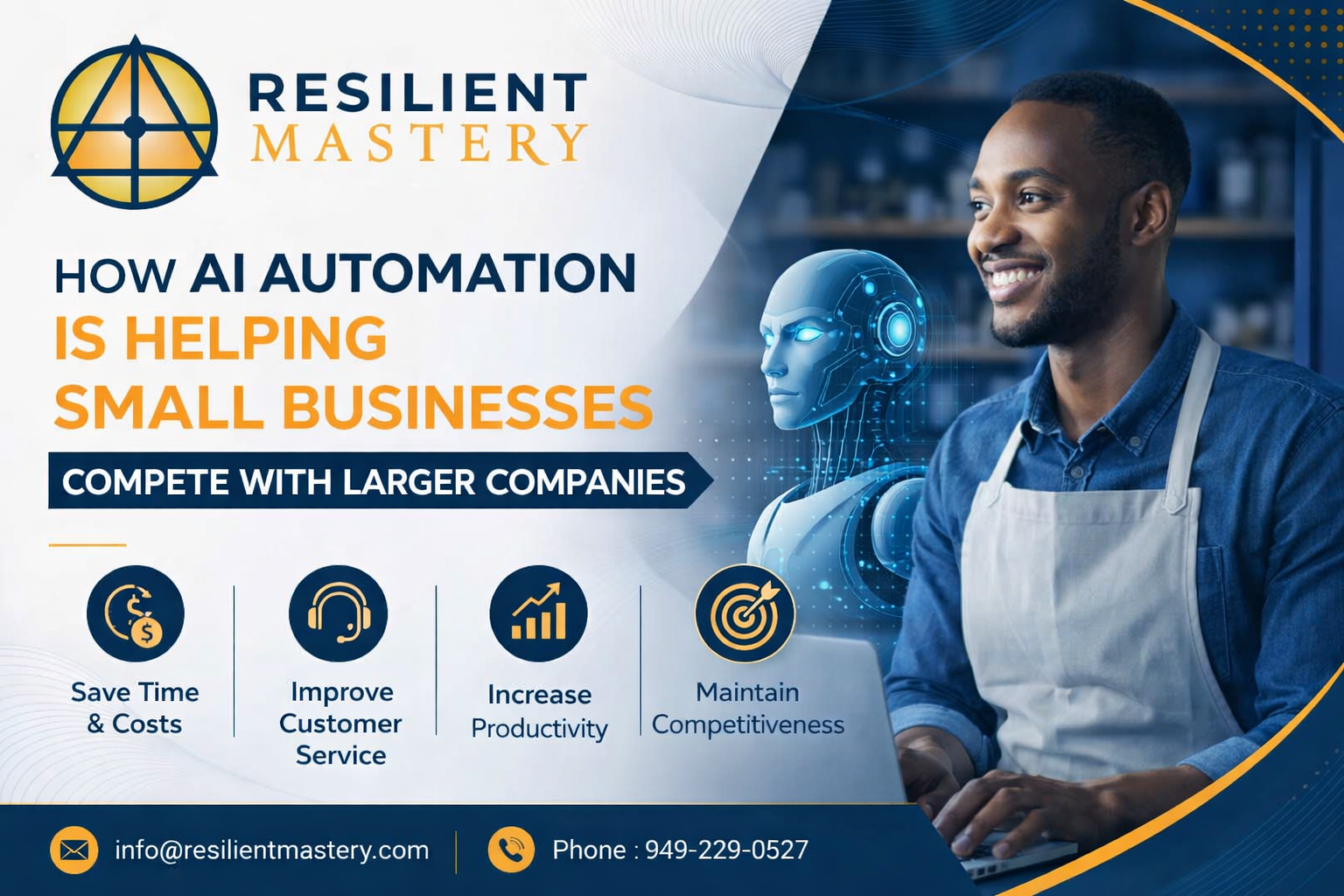
Advances in artificial intelligence and automation are allowing smaller businesses to operate with levels of efficiency that were once only available to large organizations.
Today, AI-powered automation tools are helping small businesses respond faster, manage customer inquiries more effectively, and compete in markets that once seemed dominated by larger companies.
The Traditional Advantage of Large Companies
Historically, larger companies benefited from several operational advantages.
They could afford:
• larger customer service teams
• dedicated administrative staff
• advanced software systems
• specialized operational departments
These resources allowed large organizations to manage high communication volumes and customer interactions efficiently.
Small businesses, on the other hand, often relied on a few individuals handling multiple responsibilities at once.
A single missed call or delayed response could mean losing a potential customer to a larger competitor.
Changing Customer Expectations
Customer expectations have evolved significantly over the past decade.
People now expect businesses to respond quickly when they reach out.
Whether someone is contacting a company through a phone call, website form, or message, they often expect a response within minutes rather than hours.
Large companies often meet these expectations through large support teams and structured systems.
Without similar systems in place, smaller businesses may struggle to match that level of responsiveness.
This is where AI automation is beginning to level the playing field.
Automation as a Force Multiplier
One of the most powerful aspects of automation is its ability to multiply the effectiveness of a small team.
Instead of hiring multiple employees to handle repetitive tasks, automation systems can assist with many of these responsibilities.
For example, automation tools can:
answer incoming calls
respond to missed calls with text messages
schedule appointments automatically
capture customer information
send follow-up messages
organize leads within a CRM system
By handling these tasks automatically, automation systems allow small teams to operate more efficiently.
This creates the effect of having a much larger operational capacity without dramatically increasing staffing costs.
Competing on Speed
Speed is one of the most important competitive advantages in modern business communication.
When a customer contacts multiple businesses, the company that responds first often wins the opportunity.
AI-powered systems can help small businesses respond instantly to incoming inquiries.
For example:
A missed call can trigger an immediate text message.
A website inquiry can receive an automated response confirming the request.
An AI voice agent can answer incoming calls and gather important information.
These rapid responses help small businesses compete effectively against larger companies that may rely on traditional communication processes.
Improving Customer Experience
Customer experience is no longer defined only by the quality of a product or service.
Communication plays a major role in how customers perceive a business.
Fast responses, clear communication, and organized scheduling create a positive experience for customers.
Automation systems help ensure that customers receive prompt responses and clear information.
When communication is smooth and efficient, customers often feel more confident working with a business.
This improved experience can lead to stronger relationships and higher customer satisfaction.
Managing Growth Without Overwhelming Staff
Many small businesses face challenges when demand begins to increase.
More customers often means more phone calls, messages, and scheduling requests.
Without strong systems in place, this growth can place significant pressure on small teams.
Automation systems help manage this increase in communication volume by handling repetitive tasks automatically.
This allows staff members to focus on delivering services, building customer relationships, and growing the business. Facebook
Making Professional Systems Accessible
In the past, advanced communication systems were often expensive and difficult for small businesses to implement.
Modern automation platforms have made these systems more accessible.
Cloud-based software, AI communication tools, and integrated CRM platforms allow businesses of many sizes to adopt professional operational systems.
This accessibility is helping smaller companies compete in industries where large organizations once held significant advantages.
Strengthening Local Businesses
Automation technology is particularly valuable for local businesses that depend heavily on customer communication.
Examples include:
home service companies
medical practices
dental clinics
med spas
real estate teams
consultants
local service providers
These businesses often rely on phone calls and inquiries to generate new customers.
Automation tools help ensure that these opportunities are captured even during busy hours.
The Future Competitive Landscape
As automation technology becomes more widely available, businesses that adopt these systems early may gain a meaningful advantage.
Companies that respond quickly, communicate clearly, and manage inquiries efficiently often build stronger reputations and capture more opportunities.
Small businesses that leverage automation effectively can compete with organizations much larger than themselves.
Technology is increasingly allowing agility and efficiency to outweigh sheer size.
Final Thoughts
For many years, larger companies held a significant operational advantage over smaller competitors.
Today, AI automation is beginning to change that balance.
By improving response speed, organizing communication, and reducing administrative workload, automation systems allow small businesses to operate more efficiently and compete more effectively.
Businesses that adopt these tools can strengthen their communication systems, support their teams, and position themselves for sustainable growth.
If you would like to learn more about how AI automation systems can help your business operate more efficiently and capture more opportunities, visit: More