communication and service quality.
Introduction
The Automation Growth is one of the most exciting stages in any business.
More customers begin reaching out.
More opportunities appear.
Revenue starts increasing.
However, growth also brings new challenges.
As a business becomes busier, operations often become more complicated. Communication increases, customer inquiries multiply, and administrative tasks begin to pile up.
What once felt manageable can quickly become overwhelming.
Many businesses discover that the systems that worked when they were smaller no longer work as efficiently once the company begins to grow.
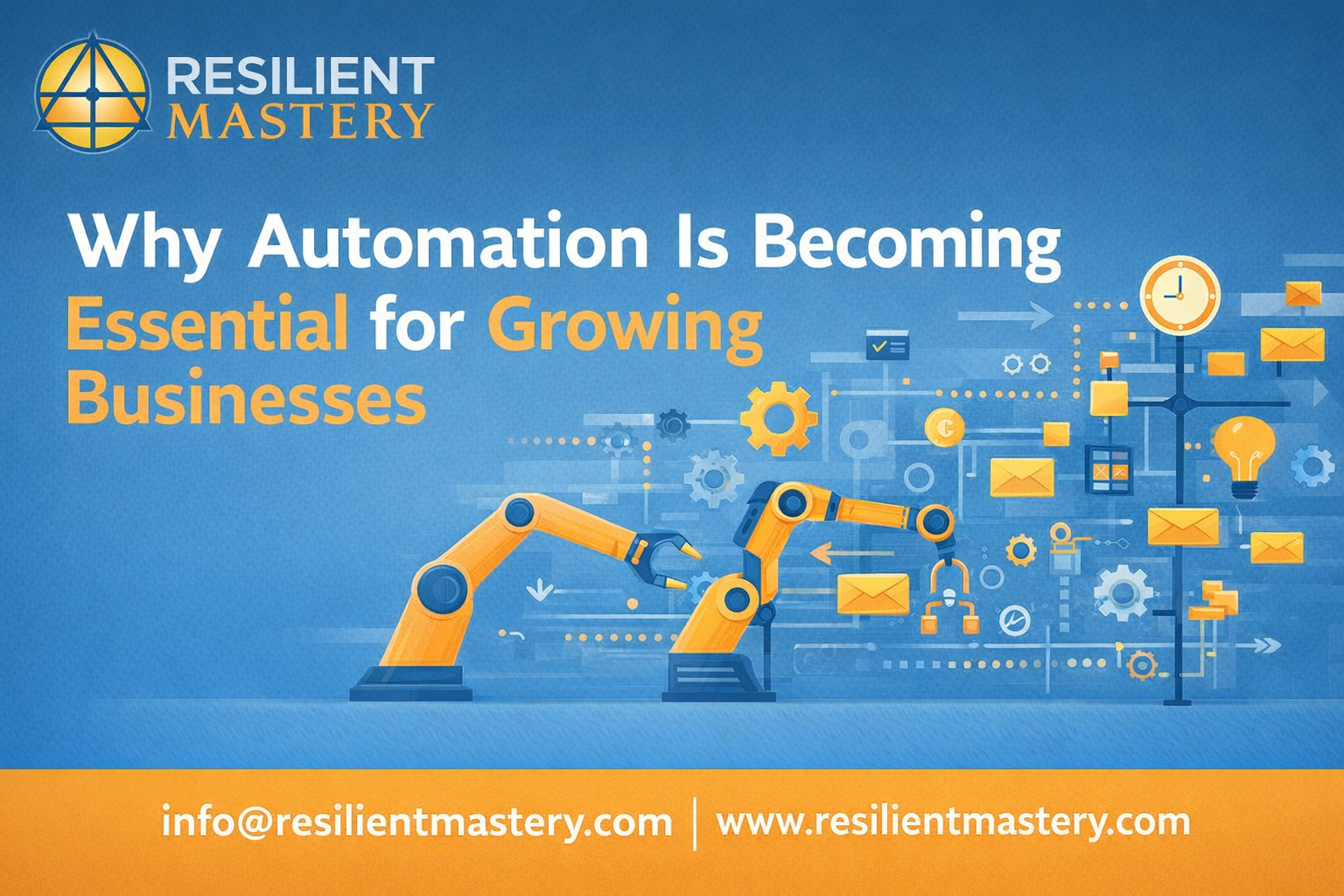
This is one of the reasons why automation is becoming an essential tool for modern businesses.
Automation helps companies manage increasing workloads while maintaining consistent
The Operational Pressure of GrowthInstead, pressure appears across multiple parts of the organizat
ion at the same time.
For example, a gWhen a business begins to grow, the workload rarely increases in just one area.
rowing business may experience:
• more incoming phone calls
• increased website inquiries
• more appointment scheduling
• additional customer questions
• higher administrative workload
Without systems designed to handle this increase, teams can quickly become stretched thin.
Employees may find themselves spending large amounts of time handling repetitive tasks instead of focusing on higher-value work.
Over time, this can create bottlenecks that slow down operations and reduce efficiency.
.The Limits of Manual Processes
Many businesses initially rely on manual processes to manage operations.
These may include:
manually answering all incoming calls
responding to inquiries individually
scheduling appointments by phone
tracking leads using spreadsheets
sending follow-up messages manually
While these methods may work during the early stages of a business, they often struggle to keep up as communication volume grows.
Manual systems depend heavily on human availability and consistency.
If staff members become busy or overwhelmed, delays and missed opportunities can occur.
These limitations are one of the primary reasons businesses begin exploring au
What Business Automation Actually Means
Business automation refers to systems that allow certain operational tasks to be handled automatically.
These systems are typically designed to support teams by managing repetitive or time-sensitive tasks.
Examples of business automation include:
automated appointment scheduling
missed-call text responses
automated follow-up messages
lead capture systems
AI receptionists
CRM workflow automation
These tools allow businesses to respond quickly and consistently without requiring constant manual input from staff.
Automation does not eliminate the need for human involvement.
Instead, it helps businesses use their time and resources more efficiently.
generate a facebook poster (1:1) for resilient mastery regarding
The Consistency Advantage
Another benefit of automation is consistency.
Human teams can perform exceptionally well, but performance can vary depending on workload, time of day, and staff availability.
Automation systems operate using predefined processes.
This ensures that certain tasks are handled consistently every time.
For example:
• missed calls always receive a response
• inquiries are automatically logged
• follow-up messages are sent on schedule
• customer data is recorded accurately
This consistency improves reliability and helps businesses maintain strong communication standards.
Improving Customer Experience
Automation can also significantly improve the customer experience.
Customers value fast responses and clear communication.
Automation systems help businesses meet these expectations by ensuring that inquiries are acknowledged quickly.
For example, when a customer contacts a business, they may receive:
• an immediate confirmation message
• available appointment options
• helpful information about services
• a prompt follow-up if additional steps are needed
These small improvements can make a significant difference in how customers perceive a business.
Fast and reliable communication helps build trust and confidence.
Supporting Teams Instead of Replacing Them
A common misconception is that automation is designed to replace employees.
In reality, the most effective automation strategies are designed to support teams rather than replace them.
Automation handles routine tasks that would otherwise consume large amounts of time.
This allows employees to focus on work that requires human attention, such as:
customer relationships
service delivery
problem solving
strategic planning
By reducing repetitive workload, automation can actually make employees more productive and less stressed.
When Businesses Typically Adopt Automation
Businesses often begin exploring automation when they notice certain patterns.
These may include:
missed calls becoming more frequent
slow response times to inquiries
difficulty managing appointments
growing administrative workload
inconsistent follow-up with leads
These signals often indicate that manual systems are reaching their limits.
Automation provides a way to stabilize operations and prepare the business for continued growth.
The Competitive Advantage of Automation
As more businesses adopt automation, companies that rely entirely on manual processes may find it difficult to keep up.
Automation allows businesses to respond faster, manage higher volumes of communication, and maintain consistent customer experiences.
This creates a competitive advantage.
Businesses that implement strong operational systems often capture more opportunities and operate more efficiently.
Over time, these improvements can contribute to sustained growth and stronger customer relationships.
Final Thoughts
Growth brings exciting opportunities, but it also creates operational challenges.
Without the right systems in place, increasing workloads can lead to missed opportunities and communication delays.
Automation helps businesses manage these challenges by improving efficiency, consistency, and responsiveness.
By supporting teams and streamlining operations, automation allows businesses to focus on what matters most — serving their customers and continuing to grow.
If you would like to explore how modern automation systems can support your business operations, visit: