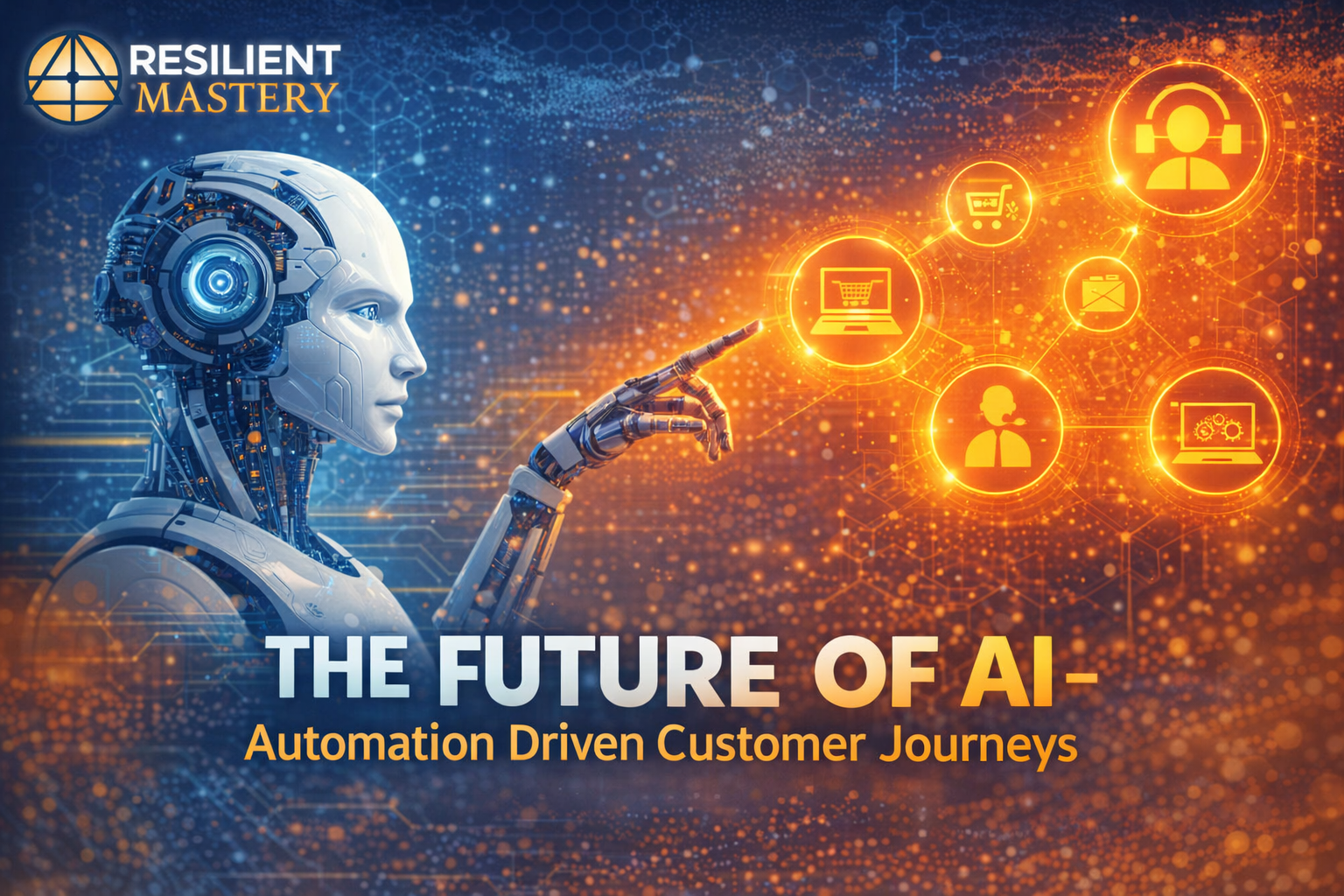
Discover how the Future of AI- Automation is transforming customer journeys with smarter personalization, predictive insights, and seamless automation across every touchpoint.
Introduction: Understanding the Future of AI- Automation
The digital landscape is evolving at an unprecedented pace, and businesses are under constant pressure to deliver faster, smarter, and more personalized experiences. At the center of this transformation lies the Future of AI- Automation, a powerful force reshaping how companies interact with their customers.
Customer journeys are no longer linear. Today’s consumers expect real-time responses, personalized recommendations, and seamless transitions across platforms. Traditional marketing and customer engagement strategies are no longer sufficient to meet these expectations. This is where AI-driven automation steps in.
The Future of AI- Automation is not just about replacing manual processes—it’s about creating intelligent, adaptive systems that learn from customer behavior and continuously improve the experience. From the first interaction to post-purchase engagement, AI is redefining every stage of the customer journey.
What is the Future of AI- Automation in Customer Journeys?
The Future of AI- Automation refers to the integration of artificial intelligence with automated systems to optimize and personalize customer interactions at scale. It combines machine learning, data analytics, natural language processing, and predictive modeling to create smarter workflows.
In customer journeys, this means:
- Understanding customer behavior in real-time
- Predicting future actions and needs
- Delivering hyper-personalized experiences
- Automating repetitive tasks without losing the human touch
Instead of static marketing funnels, businesses now operate dynamic, AI-driven ecosystems that adapt to each user individually.
Why the Future of AI- Automation Matters for Businesses
The importance of the Future of AI- Automation cannot be overstated. Businesses that adopt AI-driven automation gain a significant competitive advantage.
1. Enhanced Customer Experience
Customers receive tailored recommendations, instant responses, and consistent communication across channels.
2. Increased Efficiency
Automation reduces manual work, allowing teams to focus on strategy and creativity.
3. Better Decision-Making
AI analyzes vast amounts of data to provide actionable insights.
4. Higher Conversion Rates
Personalized experiences lead to improved engagement and sales.
5. Scalability
Businesses can handle millions of interactions without compromising quality.
Key Components of the Future of AI- Automation
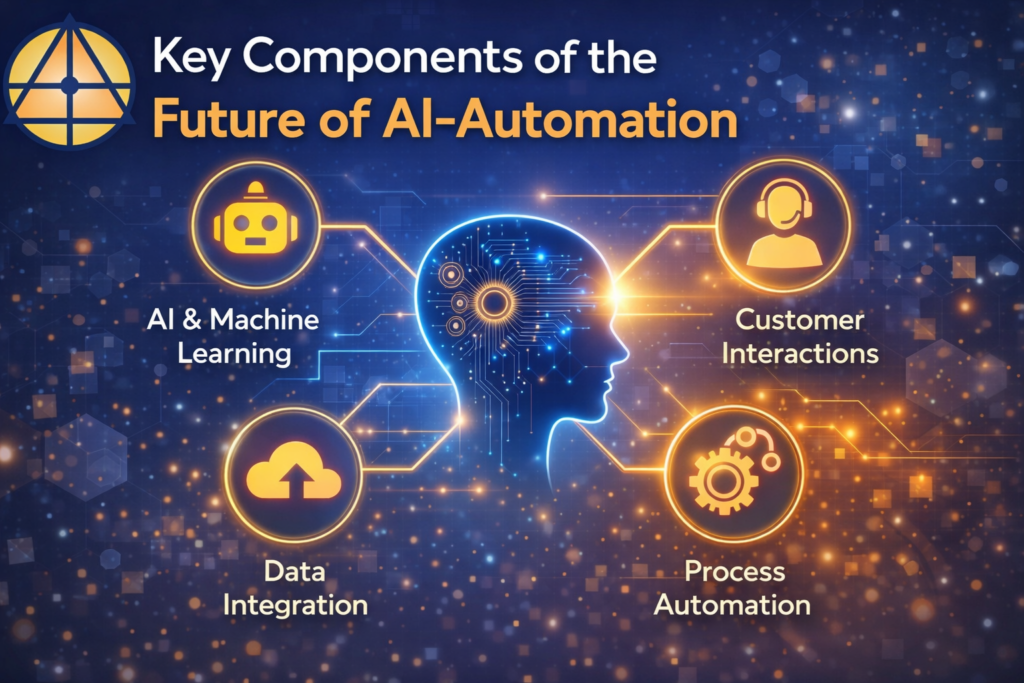
To fully understand the Future of AI- Automation, it’s essential to explore its core components.
1. Machine Learning
Machine learning algorithms analyze customer data to identify patterns and improve decision-making over time.
2. Natural Language Processing (NLP)
NLP enables chatbots and virtual assistants to understand and respond to human language naturally.
3. Predictive Analytics
Predictive models anticipate customer needs and behaviors before they occur.
4. Robotic Process Automation (RPA)
RPA automates repetitive tasks such as data entry, email responses, and workflow management.
5. Customer Data Platforms (CDPs)
These platforms unify data from multiple sources to create a single customer view.
The Role of the Future of AI- Automation in Customer Journey Stages
The Future of AI- Automation impacts every stage of the customer journey.
Awareness Stage
AI analyzes browsing behavior, search patterns, and social media activity to target the right audience with relevant content.
Consideration Stage
Automation delivers personalized emails, product recommendations, and targeted ads based on user preferences.
Decision Stage
AI-powered chatbots assist customers in real-time, answering questions and guiding purchasing decisions.
Retention Stage
Automated follow-ups, loyalty programs, and personalized offers keep customers engaged.
Advocacy Stage
AI identifies satisfied customers and encourages them to leave reviews or refer others.
Learn With: LinkedIn
Personalization: The Core of the Future of AI- Automation
Personalization is at the heart of the Future of AI- Automation. Modern customers expect brands to understand their needs without explicitly stating them.
AI enables:
- Dynamic website content
- Personalized email campaigns
- Product recommendations based on behavior
- Customized user interfaces
This level of personalization was impossible with traditional systems. Now, AI makes it scalable and efficient.
Omnichannel Experiences Powered by the Future of AI- Automation
Customers interact with brands across multiple platforms—websites, mobile apps, social media, and more. The Future of AI- Automation ensures consistency across all these channels.
For example:
- A customer browsing products on a website receives follow-up emails with similar recommendations
- Chat history is preserved across devices
- Customer support interactions remain consistent regardless of the channel
This seamless experience builds trust and improves satisfaction.
Predictive Customer Journeys and the Future of AI- Automation
One of the most exciting aspects of the Future of AI- Automation is predictive capability.
AI can:
- Anticipate customer needs
- Suggest products before customers search for them
- Identify potential churn risks
- Trigger automated interventions
For example, if a customer shows signs of disengagement, AI can automatically send personalized offers to re-engage them.
AI Chatbots and Virtual Assistants in the Future of AI- Automation
Chatbots and virtual assistants are becoming essential tools in the Future of AI- Automation.
They provide:
- 24/7 customer support
- Instant responses
- Cost-effective service solutions
- Consistent communication
Advanced AI chatbots can handle complex queries, understand context, and even detect emotions, making interactions more human-like.
Data-Driven Insights in the Future of AI- Automation
Data is the foundation of the Future of AI- Automation. Every interaction generates valuable information that AI systems use to improve performance.
Key benefits include:
- Real-time analytics
- Customer segmentation
- Performance tracking
- Continuous optimization
Businesses can make informed decisions and refine their strategies based on actual customer behavior.
Challenges in Implementing the Future of AI- Automation
Despite its advantages, the Future of AI- Automation comes with challenges.
1. Data Privacy Concerns
Customers are increasingly concerned about how their data is used.
2. Integration Complexity
Implementing AI systems requires integration with existing tools and platforms.
3. High Initial Investment
AI technologies can be expensive to deploy initially.
4. Skill Gaps
Organizations need skilled professionals to manage AI systems.
5. Over-Automation Risks
Excessive automation can reduce the human touch, leading to a poor customer experience.
Best Practices for Adopting the Future of AI- Automation
To successfully implement the Future of AI- Automation, businesses should follow these best practices:
Start Small
Begin with specific use cases such as chatbots or email automation.
Focus on Data Quality
Ensure accurate and clean data for better AI performance.
Maintain Human Oversight
Combine automation with human interaction where necessary.
Continuously Optimize
Regularly analyze performance and refine strategies.
Prioritize Customer Experience
Always keep the customer at the center of your strategy.
The Future Trends of AI- Automation in Customer Journeys
The Future of AI- Automation will continue to evolve with new innovations.
Hyper-Personalization
AI will deliver even more precise and individualized experiences.
Voice and Conversational AI
Voice assistants will become a primary interaction channel.
Emotion AI
Systems will detect and respond to customer emotions.
Autonomous Customer Journeys
Fully automated journeys with minimal human intervention.
AI Ethics and Transparency
Businesses will focus more on ethical AI practices and transparency.
Real-World Applications of the Future of AI- Automation
The Future of AI- Automation is already transforming industries.
E-commerce
Personalized product recommendations and automated customer support.
Banking
Fraud detection, automated customer service, and personalized financial advice.
Healthcare
Patient engagement, appointment scheduling, and predictive diagnostics.
Marketing
Automated campaigns, audience segmentation, and performance optimization.
How Small Businesses Can Leverage the Future of AI- Automation
AI is no longer limited to large enterprises. The Future of AI- Automation is accessible to small businesses as well.
Affordable tools allow small businesses to:
- Automate email marketing
- Use chatbots for customer support
- Analyze customer data
- Personalize user experiences
This levels the playing field and enables smaller companies to compete effectively.
Measuring Success in the Future of AI- Automation
To evaluate the impact of the Future of AI- Automation, businesses should track key metrics:
- Customer engagement rates
- Conversion rates
- Customer satisfaction scores
- Retention rates
- Return on investment (ROI)
Continuous monitoring ensures long-term success.
Conclusion: Embracing the Future of AI- Automation
The Future of AI- Automation is redefining how businesses interact with their customers. It is transforming customer journeys from static processes into dynamic, intelligent experiences.
Companies that embrace AI-driven automation will not only improve efficiency but also build stronger, more meaningful relationships with their customers. The key lies in balancing automation with personalization and maintaining a human touch.
As technology continues to advance, the possibilities are endless. The businesses that adapt today will lead tomorrow.