The Automation Paradox
AI chatbots can answer questions faster, cheaper, and 24/7. Yet customers still crave empathy, nuance, and the human touch. The paradox of 2025: businesses must deliver automation for efficiency and human connection for loyalty.
This article explores how to strike that balance, ensuring customer experiences are both seamless and human-centered.
The Rise of Chatbots in Modern Business
Chatbots are no longer a futuristic concept—they are now a standard part of many digital platforms. Whether on websites, social media, or messaging apps, businesses are using bots to automate repetitive tasks and provide instant responses.
Why Chatbots Are Popular
There are several reasons behind the growing adoption of chatbots:
- 24/7 Availability: Unlike human agents, chatbots never sleep. They can handle customer queries at any time of the day.
- Instant Responses: Customers don’t have to wait in long queues for answers.
- Scalability: A single chatbot can handle thousands of conversations simultaneously.
- Cost Efficiency: Reduces the need for large customer support teams.
For businesses looking to scale quickly, chatbots are an attractive option. However, efficiency alone doesn’t guarantee a great customer experience.
The Human Touch: Why Empathy Still Matters
While chatbots excel in speed and consistency, they often fall short when it comes to understanding emotions. Human interaction brings something that machines still struggle to replicate—empathy.
What Makes Human Support Valuable?
- Emotional Intelligence: Humans can understand tone, frustration, and urgency.
- Personalization: Real conversations adapt naturally based on context.
- Complex Problem Solving: Humans can think creatively and handle unique situations.
- Trust Building: Customers feel more valued when they interact with a real person.
Imagine a frustrated customer dealing with a billing issue. A chatbot might provide scripted responses, but a human agent can listen, empathize, and reassure the customer. That emotional connection often makes all the difference.
The Problem with Over-Automation
Many businesses make the mistake of relying too heavily on automation. While chatbots can improve efficiency, overusing them can lead to poor customer experiences.
Common Pitfalls of Excessive Automation
- Lack of Understanding: Bots may misinterpret user queries.
- Frustration Loops: Customers get stuck in repetitive, unhelpful responses.
- No Emotional Awareness: Bots cannot genuinely understand feelings.
- Limited Flexibility: Pre-programmed responses may not fit every situation.
When customers feel unheard or misunderstood, they quickly lose trust in the brand. In some cases, over-automation can even drive customers away.
The Sweet Spot: Blending Chatbots with Human Support
The key isn’t choosing between chatbots and humans—it’s combining them strategically. A hybrid approach allows businesses to enjoy the benefits of automation while maintaining a human connection.
How to Balance Automation with Empathy
1. Use Chatbots for Repetitive Tasks
Chatbots are ideal for handling simple, repetitive queries such as:
- FAQs
- Order status updates
- Appointment bookings
- Basic troubleshooting
This frees up human agents to focus on more meaningful interactions.
2. Enable Smooth Handover to Humans
One of the most important features of a good chatbot system is the ability to transfer conversations to a human agent when needed.
A seamless handover ensures:
- No loss of conversation history
- Faster resolution
- Better customer satisfaction
3. Design Conversational, Human-Like Bots
While bots aren’t human, they can still feel more natural. Use:
- Friendly language
- Personalized greetings
- Context-aware responses
Avoid overly robotic or generic replies.
4. Train Bots with Real Customer Data
The more data your chatbot learns from, the better it becomes. Use past interactions to improve accuracy and relevance.
5. Keep Empathy at the Core
Even automated responses should reflect understanding and care. For example:
Instead of:
“Your request is being processed.”
Use:
“We understand this is important to you. Let me check that for you right away.”
Small changes in tone can make a big difference.
Real-World Use Cases of Hybrid Support
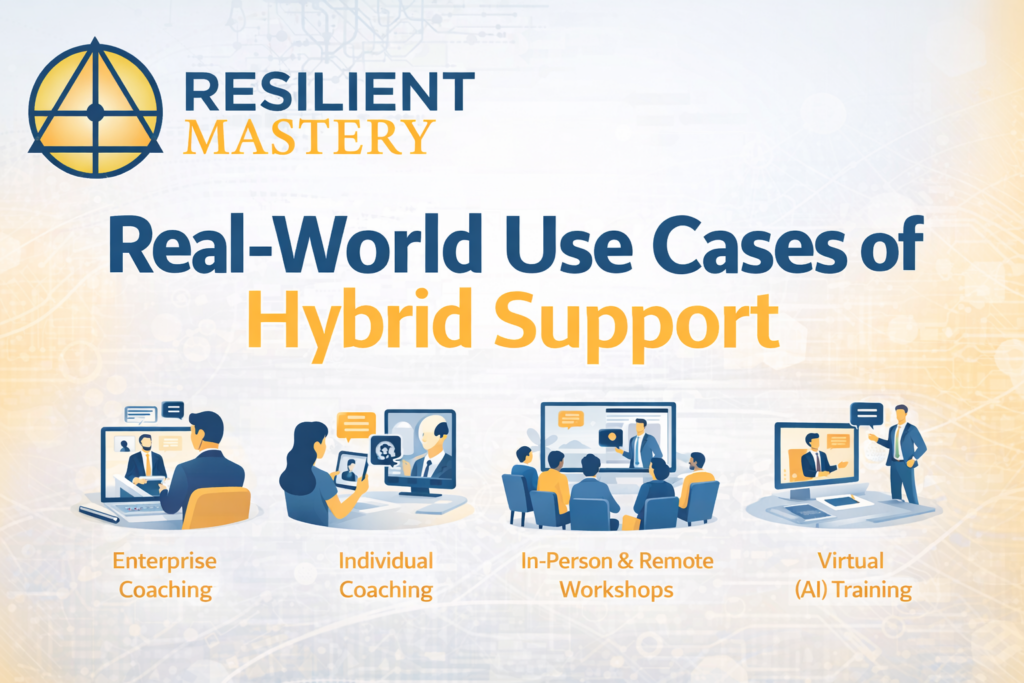
Many successful companies are already using a combination of chatbots and human agents.
E-commerce
- Chatbots handle order tracking and product inquiries
- Humans assist with returns, complaints, and complex issues
Healthcare
- Bots schedule appointments and send reminders
- Doctors and staff handle sensitive consultations
Banking
- Chatbots provide account information and transaction alerts
- Human agents deal with fraud, disputes, and financial advice
In each case, automation handles efficiency while humans handle empathy.
Benefits of a Balanced Approach
When businesses successfully combine chatbots and human support, they unlock several advantages:
1. Improved Customer Satisfaction
Customers get quick answers without sacrificing personal attention.
2. Increased Efficiency
Routine tasks are automated, reducing workload for human teams.
3. Better Resource Allocation
Human agents can focus on high-value interactions.
4. Stronger Brand Trust
Empathy-driven support builds long-term relationships.
The Role of AI in Enhancing Empathy
Modern AI is becoming more advanced, with capabilities like sentiment analysis and natural language processing. These technologies help chatbots better understand user intent and emotions.
However, it’s important to remember:
AI can assist empathy—but it cannot fully replace it.
Businesses should use AI as a tool to support human agents, not replace them entirely.
Best Practices for Businesses
To successfully balance automation with empathy, consider these best practices:
Start Small
Begin with simple chatbot functions and gradually expand.
Monitor Performance
Track metrics such as:
- Response time
- Customer satisfaction
- Resolution rate
Gather Feedback
Ask customers about their experience and improve accordingly.
Train Your Team
Ensure human agents are skilled in communication and empathy.
Continuously Improve
Technology and customer expectations evolve—your strategy should too.
Future of Customer Interaction
The future isn’t about bots vs. humans—it’s about collaboration.
We are moving toward a model where:
- Chatbots act as the first line of support
- Humans step in when empathy and critical thinking are required
This partnership will define the next generation of customer experience.
Why Chatbots Took Over (and Why They Can’t Do It All)
- Speed & Scale: Chatbots handle thousands of queries simultaneously.
- Cost Savings: Companies save 30–40% on support costs.
- Availability: Always-on, across time zones.
But bots have limits:
- Lack of empathy in sensitive cases.
- Misunderstandings in complex situations.
- Customer frustration when escalation paths aren’t clear.
📊 Stat: 63% of consumers say they’ll leave a brand after one poor automated experience.
The Psychology of Empathy in Business
Customers want to feel heard, understood, and valued. Human interaction provides:
- Emotional resonance (tone, reassurance, humor).
- Contextual nuance (understanding unique situations).
- Trust-building (seeing “real people” behind the brand).
Automation must enhance — not erase — these moments.
Finding the Balance: The Hybrid Model
When to Use Chatbots
- Tier 1 Support: FAQs, order status, appointment booking.
- Lead Capture: Qualifying prospects before human outreach.
- Onboarding: Step-by-step tutorials and reminders.
When to Use Humans
- Tier 2+ Support: Escalations, complex issues, high-value accounts.
- Emotional Cases: Complaints, sensitive industries (healthcare, finance).
- Relationship Building: Long-term loyalty, upselling, and B2B partnerships.
📊 Pro Tip: Always provide an easy human handoff option — no customer should feel “trapped” in automation.
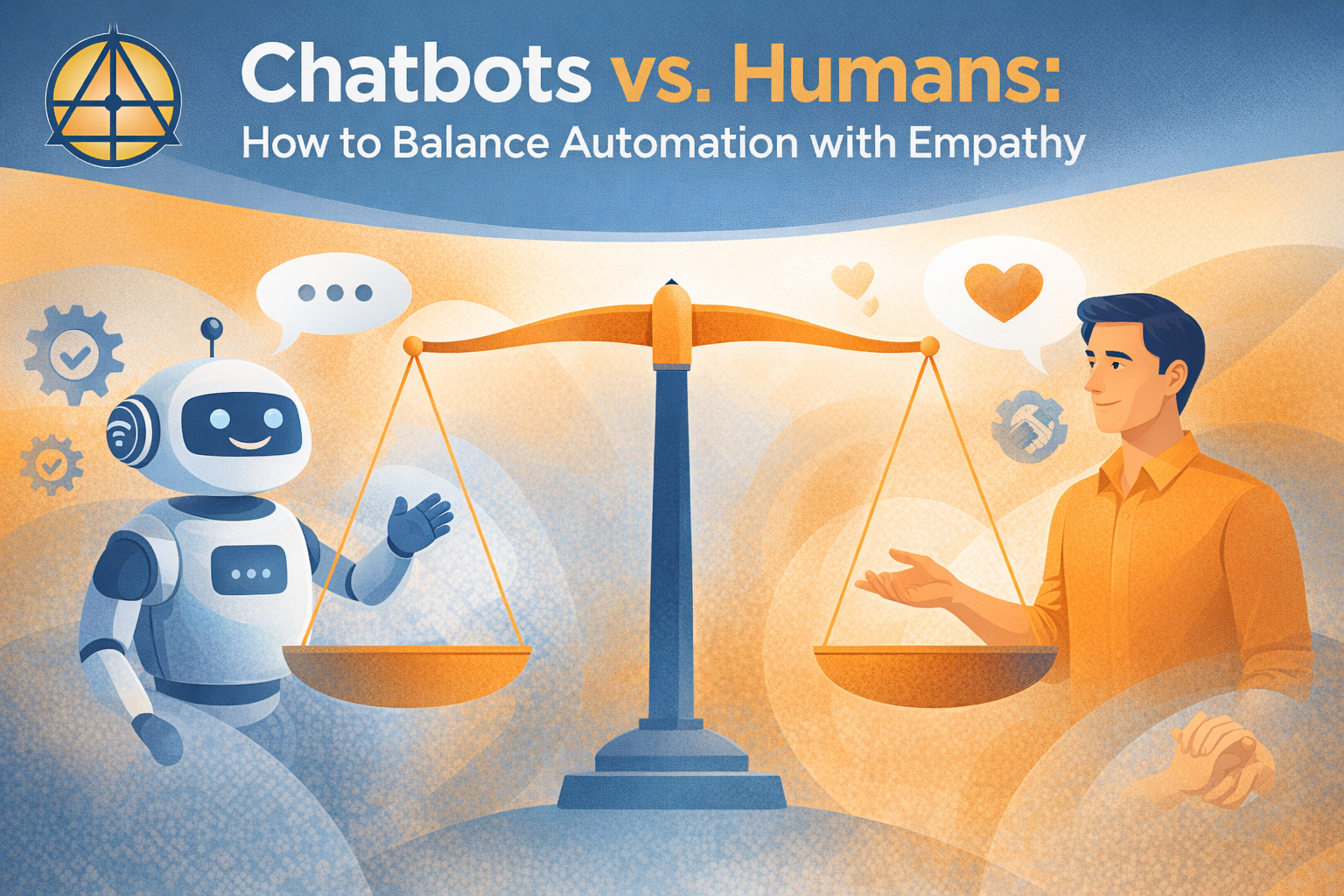
🤖 Chatbots vs. Humans: How to Balance Automation with Empathy
Automation is transforming the way businesses interact with customers—but is it enough on its own?
Chatbots can deliver instant responses, handle repetitive queries, and keep your business running 24/7. But when it comes to emotional understanding, complex issues, and building real trust, human interaction still plays a critical role.
The future isn’t about choosing between chatbots and humans—it’s about combining both strategically.
In this article, we explore how businesses can balance automation with empathy to create better customer experiences, stronger relationships, and long-term growth.
👉 Read the full blog here: LinkedIn
Framework: 5 Steps to Balance Automation and Empathy
Step 1: Map the Customer Journey
Identify where automation improves speed vs. where empathy is non-negotiable.
Step 2: Design Conversational AI with Personality
- Natural language responses.
- Polite, branded tone.
- Small “human touches” like humor or warmth.
Step 3: Train Humans in AI Collaboration
- Staff should focus on empathy, not repetition.
- Use AI to prepare agents with context before live interactions.
Step 4: Set Escalation Protocols
- If sentiment analysis detects frustration → immediate human takeover.
- Define thresholds for auto-escalation (e.g., “refund,” “angry,” “lawsuit”).
Step 5: Measure and Adjust
- Track customer satisfaction scores (CSAT).
- Monitor handoff success rates.
- Refine AI with feedback loops.
Case Studies: Chatbots + Humans in Action
Healthcare Practice
- Chatbot handled scheduling & FAQs.
- Nurses managed sensitive or emotional queries.
Result: Reduced call volume by 60% without sacrificing empathy.
E-Commerce Retailer
- Bot managed product lookups + shipping updates.
- Humans stepped in for damaged order complaints.
Result: Customer satisfaction jumped 25%.
SaaS Company
- AI handled onboarding tutorials.
- Success managers focused on relationship-building.
Result: Higher retention + upsell rates.
Future of Chatbot-Human Collaboration
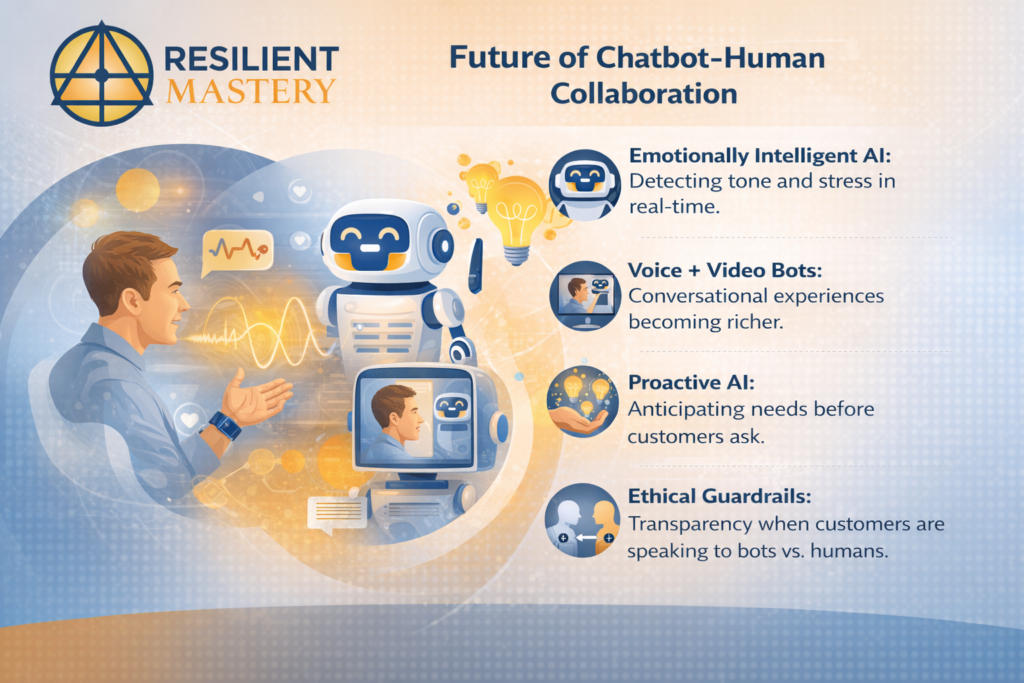
- Emotionally Intelligent AI: Detecting tone and stress in real-time.
- Voice + Video Bots: Conversational experiences becoming richer.
- Proactive AI: Anticipating needs before customers ask.
- Ethical Guardrails: Transparency when customers are speaking to bots vs. humans.
More
Human Empathy, AI Efficiency
The future isn’t bots replacing humans — it’s bots empowering humans.
Businesses that thrive will be those that use AI to handle routine tasks while reserving human energy for empathy, creativity, and loyalty-building moments.