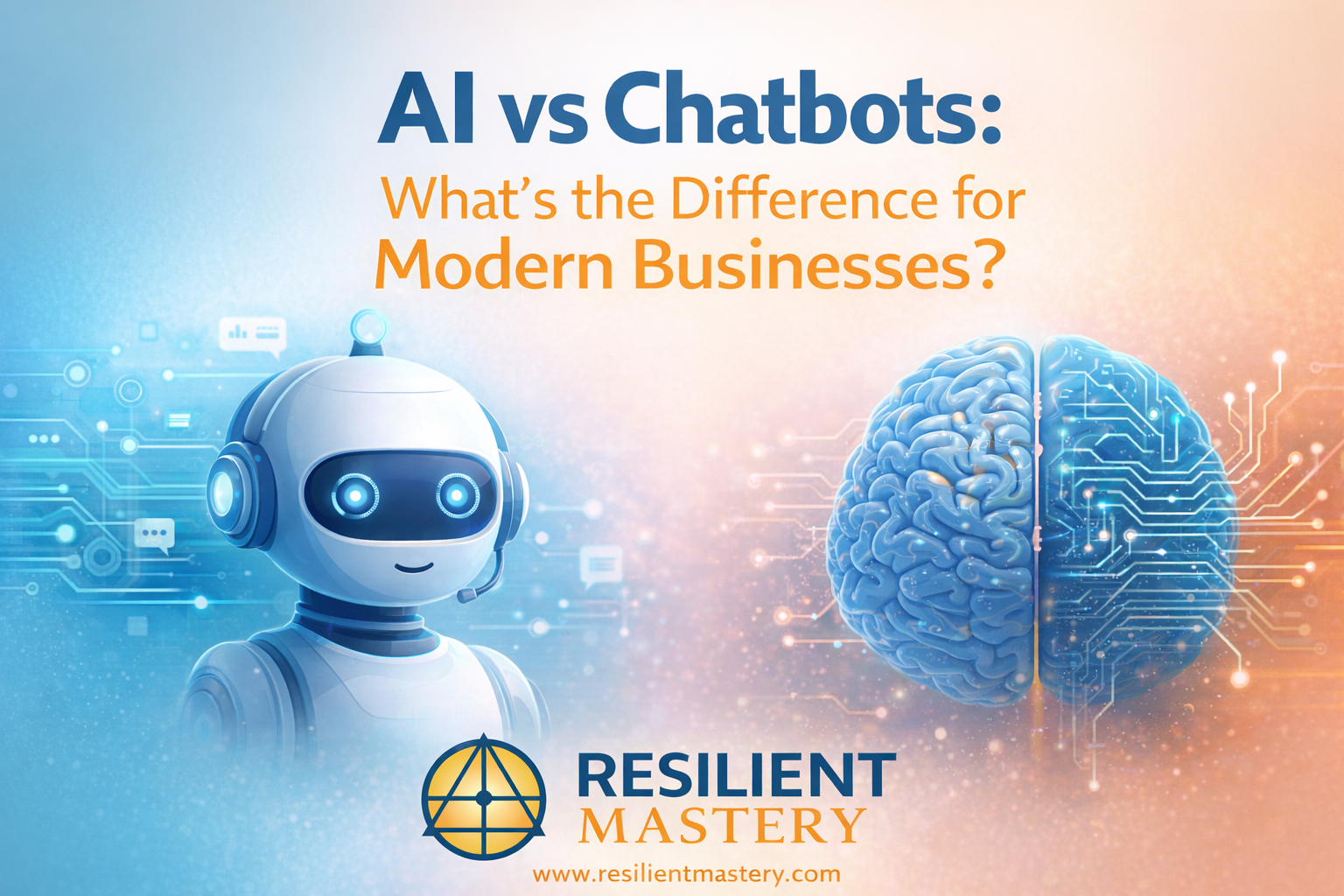
Artificial Intelligence has rapidly become one of the most transformative forces in modern business. AI vs Chatbots From automation to customer engagement, companies are constantly exploring smarter ways to operate and grow.
However, with this rapid evolution comes confusion—especially when it comes to AI vs Chatbots.
Many business owners hear terms like AI agents, automation systems, and chatbots used interchangeably. This creates a major misunderstanding:
Are AI and chatbots the same thing?
The simple answer is no.
Understanding the difference between AI vs Chatbots is critical for businesses that want to improve communication, automate processes, and increase lead conversion. While both technologies aim to streamline interactions, their capabilities and impact are very different.
In this guide, we’ll break down everything you need to know about AI vs Chatbots, so you can make smarter decisions for your business.
The Evolution of Business Communication
Business communication has undergone a remarkable transformation over the past century. From handwritten letters to real-time digital interactions powered by artificial intelligence, the way businesses communicate has continuously evolved to meet the demands of speed, efficiency, and customer expectations. Understanding this evolution not only provides insight into how far we’ve come but also helps businesses prepare for what lies ahead.
The Early Era: Traditional Communication Methods
In the early days of business, communication was slow and often unreliable. Companies relied heavily on:
- Handwritten letters
- Postal services
- Face-to-face meetings
While these methods were effective for their time, they had clear limitations. Messages could take days or even weeks to reach their destination. This delay often slowed down decision-making and limited business growth.
Despite these challenges, traditional communication built a strong foundation. It emphasized clarity, professionalism, and relationship-building—principles that still matter today.
The Rise of Telecommunication
The invention of the telephone marked a major turning point in business communication. For the first time, companies could communicate instantly over long distances.
Impact of Telephones
- Faster decision-making
- Immediate customer support
- Improved internal coordination
This era introduced the concept of real-time communication, which became essential for business operations.
Later, the introduction of fax machines allowed businesses to send documents quickly, further improving efficiency.
The Digital Revolution
The emergence of the internet completely changed how businesses communicate.
Email: A Game Changer
Email became the primary mode of communication for businesses worldwide. It offered:
- Instant message delivery
- Easy documentation
- Global reach
Compared to traditional methods, email was faster, cheaper, and more efficient.
Websites and Online Presence
Businesses began creating websites to share information and connect with customers. This marked the beginning of digital communication strategies.
The Era of Mobile Communication
With the rise of smartphones, communication became more accessible than ever.
Key Developments
- SMS (text messaging)
- Mobile email
- Instant notifications
Businesses could now reach customers anytime, anywhere. This shift increased expectations for faster responses and better service.
Social Media Transformation
Social media platforms introduced a new dimension to business communication.
What Changed?
- Two-way communication between brands and customers
- Real-time engagement
- Public feedback and reviews
Businesses were no longer just sending messages—they were having conversations.
This shift required companies to be more transparent, responsive, and customer-focused.
The Introduction of Automation
As businesses scaled, managing communication manually became difficult. This led to the adoption of automation tools.
Chatbots and Automated Systems
Chatbots were introduced to handle repetitive tasks such as:
- Answering FAQs
- Providing basic information
- Assisting with navigation
While helpful, these systems were limited in their capabilities. They often struggled with complex queries and lacked personalization.
The AI-Powered Communication Era
Today, we are in the age of Artificial Intelligence, where communication is smarter, faster, and more personalized.
What Makes AI Different?
AI-powered systems can:
- Understand natural language
- Analyze customer intent
- Provide dynamic responses
- Learn from interactions
This allows businesses to move beyond simple automation and deliver intelligent communication experiences.
Omnichannel Communication
Modern businesses no longer rely on a single communication channel.
Common Channels Today
- Social media
- Live chat
- SMS
- Phone systems
Customers expect a seamless experience across all platforms. This is known as omnichannel communication.
AI plays a crucial role in managing these channels efficiently, ensuring consistency and responsiveness.
The Role of Data in Communication
Data has become a key driver of modern business communication.
How Data Helps
- Personalizing messages
- Understanding customer behavior
- Improving targeting
- Measuring performance
Businesses can now make data-driven decisions, leading to more effective communication strategies.
Challenges in Modern Communication
Despite technological advancements, businesses still face several challenges:
- Information overload
- Maintaining personalization at scale
- Managing multiple channels
- Ensuring data privacy
To overcome these challenges, companies must adopt smarter tools and strategies.
The Future of Business Communication
The future of business communication is being shaped by emerging technologies.
Key Trends
- AI-driven conversations
- Voice assistants
- Predictive communication
- Hyper-personalization
Communication will become more proactive, with systems anticipating customer needs before they arise.
Why This Evolution Matters of AI vs Chatbots.
Understanding the evolution of business communication helps businesses:
- Adapt to changing customer expectations
- Improve efficiency
- Stay competitive
- Build stronger relationships
Companies that fail to evolve risk falling behind in an increasingly digital world.
Conclusion
The journey of business communication—from handwritten letters to AI-powered systems—highlights the importance of innovation and adaptability.
Each stage of evolution has brought new opportunities and challenges. Today, businesses have access to powerful tools that enable faster, smarter, and more meaningful communication.
As technology continues to advance, the key to success will lie in balancing automation with human connection. Businesses that embrace this balance will be better positioned to thrive in the future.
The Early Days of Chatbots
To fully understand AI vs Chatbots, we need to start with chatbots.
What Are Chatbots?
Chatbots are automated tools designed to simulate conversations with users. Early chatbots operated using rule-based systems, meaning they followed predefined scripts.
For example:
- If a user asks about business hours → chatbot gives a fixed answer
- If a user asks for contact details → chatbot provides stored information
These systems worked well for simple tasks and basic queries.
Benefits of Traditional Chatbots
- Instant responses
- 24/7 availability
- Reduced workload for support teams
- Cost-effective solution
Limitations of Chatbots
Despite their usefulness, chatbots have clear limitations:
- Cannot understand complex questions
- Struggle with unexpected queries
- Lack flexibility
- Provide robotic, repetitive responses
This is one of the biggest differences in AI vs Chatbots.
When a user asks something outside the programmed script, the chatbot often fails to respond effectively.
What Is Artificial Intelligence in Business? A Complete Guide for Modern Companies
Introduction
Artificial Intelligence (AI) is no longer a futuristic concept—it has become a core part of modern business strategy. From automating routine tasks to delivering personalized customer experiences, AI is transforming how companies operate and compete.
But many business owners still ask:
What is Artificial Intelligence in business, and how does it actually work?
In simple terms, AI in business refers to the use of advanced technologies that enable machines to perform tasks that typically require human intelligence. These include learning, problem-solving, decision-making, and understanding language.
Understanding how AI works can help businesses unlock new opportunities, improve efficiency, and stay ahead in AI vs Chatbots. an increasingly competitive market.
What Is Artificial Intelligence in Business?
Artificial Intelligence in business is the use of smart systems and algorithms to automate processes, analyze data, and improve decision-making.
These systems can:
- Process large amounts of data
- Recognize patterns
- Predict outcomes
- Interact with customers
Unlike traditional software, AI systems can learn and improve over time. This makes them more flexible and powerful for handling complex business challenges for without AI vs Chatbots tool.
Key Components of AI in Business
To understand Artificial Intelligence in business more clearly, it’s helpful to look at its core components.
1. Machine Learning (ML)
Machine learning allows systems to learn from data without being explicitly programmed. It helps businesses:
- Predict customer behavior
- Improve marketing strategies
- Detect fraud
2. Natural Language Processing (NLP)
NLP enables machines to understand and respond to human language. This is used in:
- Chat systems
- Voice assistants
- Customer support tools
3. Automation
AI-driven automation reduces the need for manual work. It can:
- Handle repetitive tasks
- Improve accuracy
- Save time and resources
4. Data Analytics
AI can analyze large datasets quickly and provide insights that help businesses make better decisions.
Benefits of Artificial Intelligence in Business
AI offers several advantages that can significantly improve business performance.
1. Increased Efficiency
AI automates repetitive tasks, allowing employees to focus on more important work.
2. Better Decision-Making
AI analyzes data and provides insights that help businesses make smarter decisions.
3. Improved Customer Experience
AI enables personalized interactions, faster responses, and better service.
4. Cost Reduction
Automation reduces operational costs by minimizing manual effort.
5. Scalability
AI systems can handle increased workloads without requiring additional resources.
How Businesses Use Artificial Intelligence
Artificial Intelligence in business is used across multiple industries and functions.
1. Customer Support
AI systems handle customer inquiries, provide instant responses, and improve satisfaction.
2. Marketing and Sales
AI helps businesses:
- Target the right audience
- Personalize campaigns
- Predict buying behavior
3. Lead Generation
AI captures and qualifies leads automatically, increasing conversion rates.
4. Operations Management
AI streamlines workflows, improves efficiency, and reduces errors.
5. Finance and Risk Management
AI detects fraud, analyzes financial data, and manages risks effectively.
Real-World Examples of AI in Business
E-commerce
AI recommends products based on customer behavior, increasing sales.
Healthcare
AI assists in diagnosis and patient management.
Banking
AI detects fraudulent transactions and improves security.
Retail
AI optimizes inventory and enhances customer experiences.
These examples show how Artificial Intelligence in business is transforming industries worldwide.
Challenges of Implementing AI
While AI offers many benefits, businesses may face challenges such as:
- High initial costs
- Data privacy concerns
- Lack of technical expertise
- Integration with existing systems
To overcome these challenges, companies need a clear strategy and the right tools.
The Future of Artificial Intelligence in Business
The future of AI in business is promising and full of opportunities AI vs Chatbots..
Emerging Trends
- Voice-based AI systems
- Predictive analytics
- Hyper-personalization
- Autonomous decision-making
AI will continue to evolve, making business operations more efficient and intelligent.
Why AI Is Important for Business Growth
Businesses that adopt AI gain a competitive advantage by:
- Improving productivity
- Enhancing customer experience
- Making faster decisions
- Increasing profitability
Ignoring AI can result in missed opportunities and slower growth.
How to Get Started with AI in Business
If you’re new to AI, start with these steps:
- Identify areas where automation is needed
- Choose the right tools or platforms
- Start small and scale gradually
- Train your team
- Monitor and optimize performance
Conclusion
Artificial Intelligence in business is no longer optional—it’s essential for growth and competitiveness AI vs Chatbots..
By automating tasks, analyzing data, and improving customer interactions, AI helps businesses operate more efficiently and effectively.
As technology continues to advance, companies that embrace AI early will be better positioned to succeed in the future.
AI vs Chatbots: The Core Differences
Let’s break down the key differences between AI vs Chatbots in a practical way.
1. Intelligence Level
- Chatbots: Rule-based, limited understanding
- AI: Advanced, context-aware
2. Flexibility
- Chatbots: Fixed responses
- AI: Dynamic and adaptive
3. Learning Ability
- Chatbots: Do not learn
- AI: Continuously improves
4. Communication Style
- Chatbots: Scripted conversations
- AI: Natural, human-like interaction
5. Task Capability
- Chatbots: Simple tasks
- AI: Complex workflows
6. Decision-Making
- Chatbots: No decision-making
- AI: Can analyze and decide
Understanding these differences is essential when comparing AI vs Chatbots for business use.
Why Businesses Are Moving Beyond Chatbots
The shift from chatbots to AI is happening because customer expectations have changed.
Modern customers expect:
- Instant responses
- Personalized communication
- Seamless experiences
- Faster service
Traditional chatbots often fail to meet these expectations.
Challenges with Chatbots
- Limited understanding
- Poor user experience
- Inability to handle complex queries
Advantages of AI Systems
- Better accuracy
- Improved customer satisfaction
- Higher efficiency
- Increased conversions
This shift is a major reason why AI vs Chatbots has become such an important topic for businesses today.
Real-World Examples of AI vs Chatbots
1. Dental Clinic
Chatbot:
- Provides office hours
- Shares contact info
AI System:
- Books appointments
- Sends reminders
- Answers treatment questions
2. Home Services Business
Chatbot:
- Lists available services
AI System:
- Collects customer requirements
- Suggests solutions
- Schedules consultations
3. Consulting Firm
Chatbot:
- Shares a booking link
AI System:
- Qualifies leads
- Recommends services
- Guides decision-making
These examples clearly highlight the difference between AI vs Chatbots in real business scenarios.
How AI Improves Lead Generation
In today’s competitive digital landscape, lead generation is no longer just about collecting contact information—it’s about engaging the right audience at the right time with the right message. This is where Artificial Intelligence is transforming the way businesses capture and convert leads.
Unlike traditional methods, AI-powered systems analyze user behavior, intent, and interaction patterns in real time. This allows businesses to move beyond guesswork and adopt a more data-driven approach to lead generation.
Smarter Lead Capture
AI tools can instantly engage website visitors through intelligent conversations. Instead of waiting for users to fill out forms, AI systems can:
- Ask relevant questions
- Understand customer needs
- Capture detailed information automatically
This ensures that no potential lead is missed, even outside business hours.
Real-Time Qualification
One of the biggest challenges in lead generation is filtering high-quality leads from general inquiries.
AI solves this by:
- Asking qualifying questions
- Analyzing responses
- Segmenting leads based on intent
This helps businesses focus on prospects who are more likely to convert, saving both time and resources.
Automated Follow-Ups
Many businesses lose leads simply because they fail to follow up on time.
AI eliminates this problem by:
- Sending instant responses
- Scheduling follow-up messages
- Nurturing leads automatically
This creates a consistent communication flow that keeps potential customers engaged to AI vs Chatbots..
Personalized Customer Experience
Modern customers expect personalized interactions. AI enables businesses to:
- Tailor responses based on user behavior
- Recommend relevant services
- Provide a more human-like experience
This level of personalization significantly increases conversion rates.
Multi-Channel Engagement
AI doesn’t just work on websites. It can manage communication across multiple channels such as:
- Messaging platforms
- Phone systems
- CRM tools
This ensures a seamless experience for customers, no matter where they interact with your business.
Why It Matters for Your Business of AI vs Chatbots.
Businesses that use AI for lead generation benefit from:
- Faster response times
- Higher conversion rates
- Better customer experience
- Reduced manual workload
If you want to see how modern businesses are implementing these strategies in real-world scenarios, you can explore insights and updates from Resilient Mastery here: LinkedIn
Final Thought
AI is not just improving lead generation—it’s redefining it. By automating communication, qualifying leads intelligently, and delivering personalized experiences, AI helps businesses capture more opportunities and turn them into real growth.
Multi-Channel Communication: A Game Changer
Another key difference in AI vs Chatbots is communication channels.
Chatbots Typically Work On:
- Websites
- Messaging apps
AI Systems Work Across:
- Phone calls
- SMS
- CRM systems
- Social media
This allows businesses to create a unified communication system.
Combining AI with Human Expertise
While AI is powerful, human interaction is still essential.
The best strategy is not AI vs Chatbots vs Humans—but a combination of all three.
AI Handles:
- Repetitive tasks
- Scheduling
- Basic inquiries
- Follow-ups
Humans Handle:
- Complex discussions
- Relationship building
- Strategic decisions
This hybrid approach creates:
- Better customer experiences
- More efficient operations
- Stronger business growth
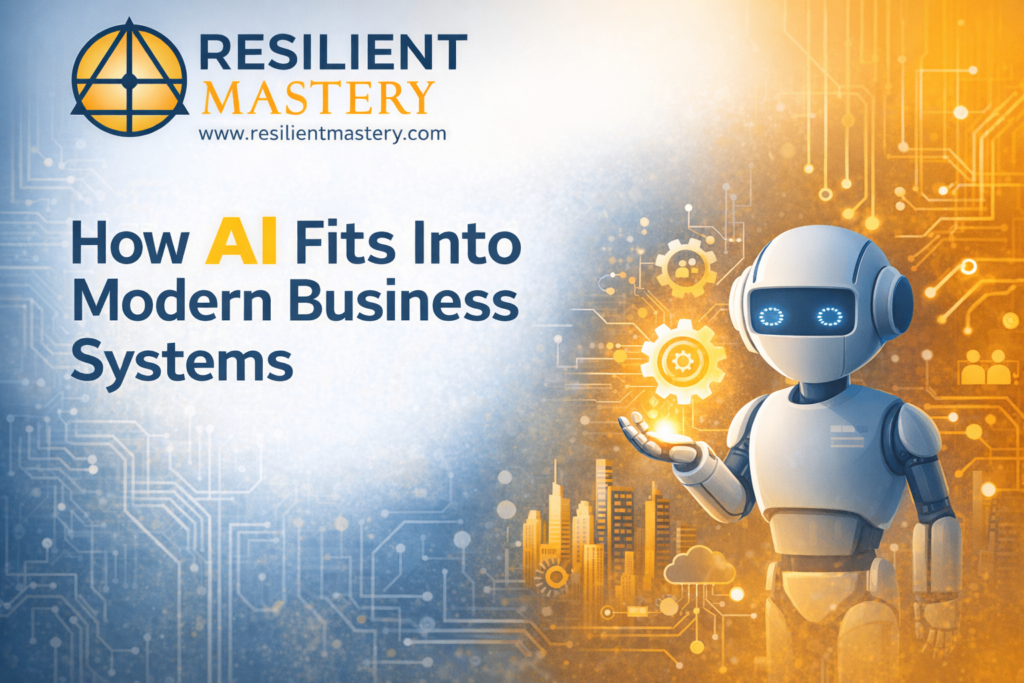
How AI Fits Into Modern Business Systems
Today’s businesses use multiple tools:
- CRM platforms
- Scheduling software
- Communication tools
AI integrates all of these into a single workflow.
Benefits of AI Integration
- Reduced manual work
- Improved accuracy
- Faster processes
- Better data insights
This is another reason why the discussion around AI vs Chatbots is so important.
Choosing the Right Solution for Your Business
When evaluating AI vs Chatbots, consider your business needs.
Choose Chatbots If:
- You need simple automation
- You have a low budget
- Your queries are basic
Choose AI If:
- You want advanced automation
- You handle complex interactions
- You want to scale efficiently
Future Trends: AI vs Chatbots
The future clearly leans toward AI.
Emerging Trends
- Voice AI systems
- Predictive automation
- Hyper-personalization
- AI-driven decision-making
Chatbots will still exist, but mostly as part of larger AI systems.
Why Early Adoption Matters
Businesses that adopt AI early gain:
- Competitive advantage
- Higher efficiency
- Better customer experience
Ignoring the shift from AI vs Chatbots to AI-driven systems can result in:
- Lost opportunities
- Lower engagement
- Reduced growth
How Resilient Mastery Helps Businesses
At Resilient Mastery, the focus is on helping businesses implement smart automation systems that actually drive results.
Key Benefits
- Instant lead capture
- Automated follow-up
- Smart communication systems
- Appointment scheduling automation
These solutions are designed to bridge the gap between AI vs Chatbots and deliver real business impact.
Call to Action
Every business faces communication challenges:
- Missed calls
- Slow responses
- Lost leads
AI-powered systems solve these problems efficiently.
👉 Next Step:
Schedule a strategy session to explore how automation can improve your business operations and lead generation.
Conclusion: AI vs Chatbots — Final Thoughts
The comparison between AI vs Chatbots comes down to capability.
- Chatbots are useful for simple tasks
- AI systems are designed for complex, intelligent automation
As businesses continue to evolve, relying solely on chatbots is no longer enough.
AI offers:
- Smarter communication
- Better efficiency
- Higher conversions
Companies that understand and leverage the difference between AI vs Chatbots will be better positioned to succeed in today’s competitive digital landscape.