Introduction
AI receptionists For decades, the front desk has been one of the most important parts of any business.
Whether it is a dental office, a home service company, a medical clinic, or a consulting firm, the front desk typically acts as the first point of contact for customers.
This role carries a great deal of responsibility. The person answering the phone must manage incoming calls, schedule appointments, answer questions, and direct inquiries to the right team members.
However, modern business environments have become far more demanding than traditional front desk systems were designed to handle.
Customers expect immediate responses.
Businesses receive inquiries across multiple channels.
Teams operate with leaner staff and heavier workloads.
As a result, many businesses struggle to keep up with communication demands.
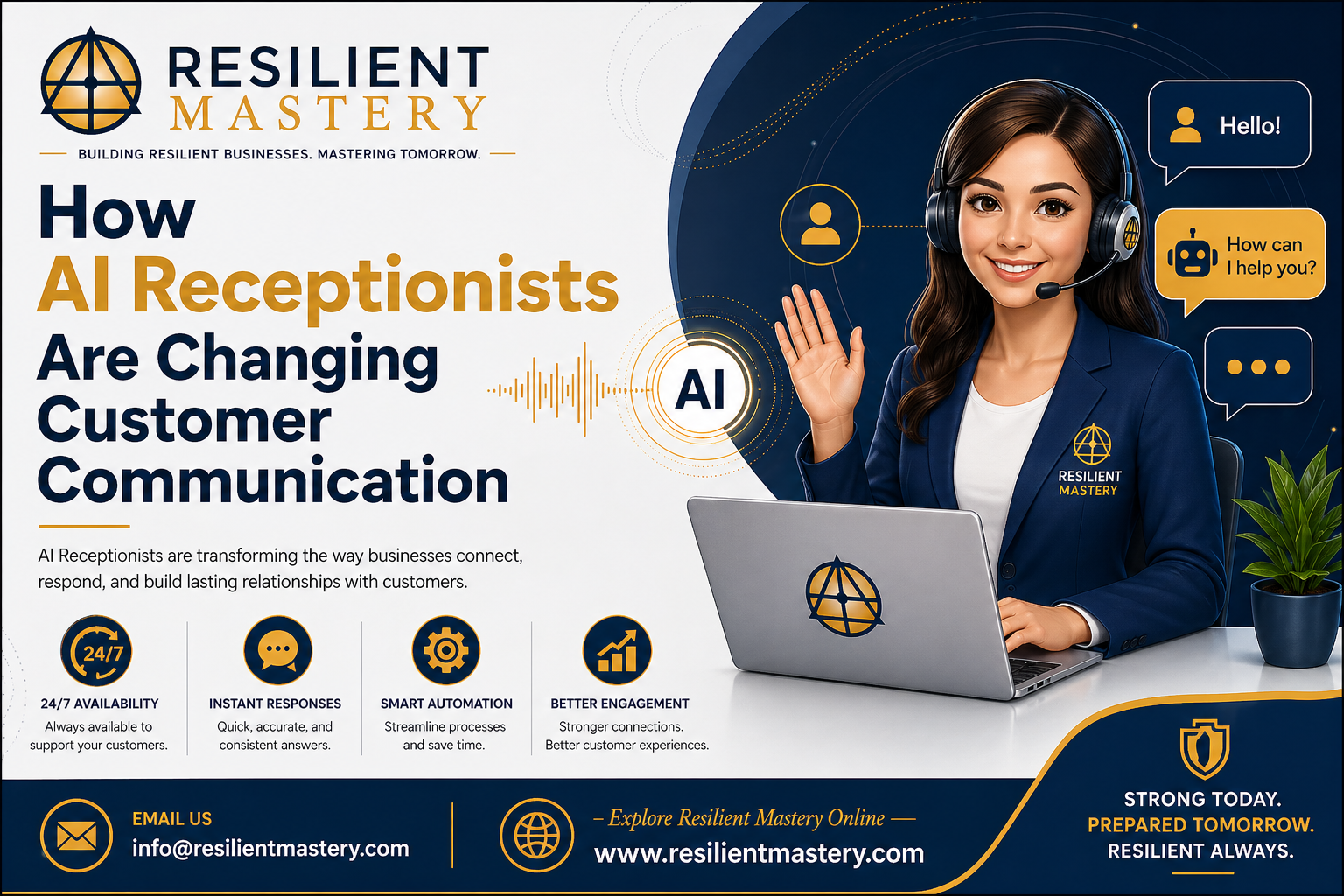
This is where AI receptionists are beginning to transform how businesses manage customer communication.
The Growing Communication Problem in Modern Business
In today’s fast-paced, hyper-connected world, communication should be easier than ever. With countless tools, instant messaging platforms, and global connectivity, businesses have more ways to communicate than at any point in history. Yet paradoxically, communication inside modern organizations is becoming more fragmented, inefficient, and misunderstood.
This growing communication problem is not just a minor inconvenience—it’s a serious business challenge that affects productivity, employee morale, decision-making, and ultimately, profitability.
The Illusion of Better Communication
At first glance, modern tools seem like a solution. Platforms like email, chat apps, video conferencing, and project management systems promise seamless collaboration. But in reality, they often create noise instead of clarity.
Employees are bombarded with:
- Endless email threads
- Constant notifications
- Multiple communication channels
- Unclear or duplicated messages
Instead of simplifying communication, businesses are facing information overload. Important messages get lost, misunderstood, or ignored.
Too Many Channels, Not Enough Clarity
One of the biggest problems in modern business communication is the lack of a centralized system. Teams often use multiple platforms simultaneously—email for formal communication, chat apps for quick updates, project tools for tasks, and meetings for discussions.
This leads to:
- Confusion about where information lives
- Missed updates
- Repeated conversations
- Lack of accountability
When communication is scattered, teams spend more time searching for information than actually working.
The Rise of Remote and Hybrid Work
Remote and hybrid work models have made communication even more complex. Without face-to-face interaction, businesses rely heavily on digital communication.
While remote work offers flexibility, it also introduces challenges:
- Misinterpretation of tone in written messages
- Delayed responses across time zones
- Reduced personal connection
- Increased chances of misalignment
A simple misunderstanding that could be resolved in minutes in person may take hours—or even days—online.
Lack of Clear Communication Skills
Technology is only part of the problem. Many professionals lack strong communication skills, especially in digital environments.
Common issues include:
- Vague instructions
- Overly complex messages
- Poor listening skills
- عدم clarity in expectations
When messages are unclear, teams make assumptions—and assumptions lead to mistakes.
Meetings That Waste Time
Ironically, meetings—meant to improve communication—often make things worse.
Many organizations suffer from:
- Too many meetings
- No clear agenda
- Unnecessary participants
- Lack of actionable outcomes
Instead of solving problems, meetings can drain productivity and create frustration.
Cultural and Language Barriers
As businesses become more global, teams often consist of people from different cultures and linguistic backgrounds.
This diversity is valuable, but it also introduces communication challenges:
- Different interpretations of messages
- Varying communication styles
- Language limitations
Without awareness and adaptation, these differences can lead to misunderstandings and conflict.
The Cost of Poor Communication
The impact of poor communication is significant. It affects nearly every aspect of a business:
- Productivity Loss: Employees spend time clarifying confusion
- Lower Employee Engagement: Frustration leads to disengagement
- Poor Decision-Making: Incomplete or incorrect information
- Missed Opportunities: Delayed or failed collaboration
- Financial Loss: Errors and inefficiencies cost money
In short, communication problems are not just internal issues—they directly impact business performance.
How Businesses Can Fix It
Addressing communication challenges requires both strategic thinking and cultural change. Here are key steps businesses can take:
1. Simplify Communication Channels
Reduce the number of platforms and define clear purposes for each tool.
2. Set Clear Communication Guidelines
Establish rules for:
- When to use email vs chat
- Response time expectations
- Meeting structures
3. Encourage Clarity and Simplicity
Promote clear, concise communication. Avoid unnecessary complexity.
4. Invest in Communication Training
Help employees improve writing, listening, and presentation skills.
5. Make Meetings More Effective
- Set clear agendas
- Limit participants
- Focus on outcomes
6. Use Technology Smartly
Automation and AI tools can help organize communication, summarize discussions, and reduce overload—but they should support clarity, not add complexity.
7. Build a Communication Culture
Encourage openness, feedback, and active listening across all levels of the organization.
The Future of Business Communication
As businesses continue to evolve, communication will remain a critical factor for success. Companies that can simplify, clarify, and humanize their communication processes will have a major competitive advantage.
The goal is not more communication—but better communication.
Customer communication used to be relatively simple.
A phone rang.
Someone answered it.
But today, businesses receive inquiries through a wide range of channels:
• phone calls
• text messages
• website forms
• live chat
• social media
• email
Each channel represents a potential opportunity — but also a potential point of failure if it is not handled quickly.
If a business cannot respond fast enough, the customer often moves on to the next provider.
Research across multiple industries shows that speed of response is one of the most important factors influencing customer decisions.
In other words, the company that responds first often wins the customer.
Unfortunately, traditional front desk systems struggle to keep up with this modern communication environment.
Why Traditional Reception Systems Struggle
Human receptionists play an incredibly valuable role in customer service.
However, there are practical limitations.
A single person can only handle so many tasks at once.
For example, a receptionist may be:
• helping a customer in person
• scheduling appointments
• responding to emails
• processing paperwork
• answering internal questions
While these tasks are being handled, incoming calls may go unanswered.
Even highly organized teams can experience communication bottlenecks during busy hours.
This does not happen because businesses do not care about customers.
It happens because human capacity is limited.
As communication channels increase, the strain on front desk teams increases as well.
learn More: LinkedIn
What an AI Receptionist Actually Is
An AI receptionist is a communication system designed to help businesses respond to inquiries automatically and instantly.
These systems can handle many front-desk style interactions, such as:
• answering incoming calls
• responding to missed calls with text messages
• scheduling appointments
• answering common customer questions
• routing inquiries to the correct department
• collecting lead information
Unlike traditional systems, AI receptionists can operate 24 hours a day without interruption.
They can also respond instantly, which is increasingly important in competitive industries.
Instead of replacing human staff, these systems often function as a support layer that helps businesses manage communication volume more effectively.
The Speed Advantage
One of the biggest advantages of AI communication systems is response speed.
When a customer contacts a business, even a delay of a few minutes can reduce the likelihood of converting that inquiry into a customer.
AI systems can respond immediately.
For example:
A missed call can trigger an automatic text message within seconds.
A website visitor can receive instant answers through automated chat.
Appointment availability can be presented immediately instead of requiring manual scheduling.
This speed dramatically improves the chances of capturing opportunities that might otherwise be lost.
The Consistency Advantage
Another major benefit is consistency.
Human teams can become overwhelmed during busy periods.
Communication quality may vary depending on workload, time of day, or staffing levels.
AI receptionists operate using structured processes that ensure responses follow consistent guidelines.
This helps businesses maintain reliable communication standards even during high-volume periods.
Customers receive timely responses regardless of how busy the team may be.
Supporting — Not Replacing — Human Teams
One common misconception about AI systems is that they are designed to replace employees.
In practice, the most effective use of AI communication tools is supporting existing teams.
AI systems handle repetitive tasks and initial responses, allowing human staff to focus on more complex responsibilities.
For example:
An AI receptionist may collect initial information from a caller and schedule the appointment.
Human staff can then focus on delivering excellent service once the customer arrives.
This approach reduces stress on front desk teams while improving overall operational efficiency.
Industries Already Adopting AI Receptionists
Many industries are beginning to adopt these systems because of the communication challenges they face.
Common examples include:
Dental clinics
Medical practices
Med spas
Home service companies
Real estate teams
consultants
law firms
These businesses often deal with a high volume of calls and inquiries while simultaneously serving customers in person.
AI reception systems help ensure that opportunities are not lost simply because someone could not answer the phone immediately.
The Financial Impact of Better Communication
Improving communication systems is not just about convenience.
It can directly influence revenue.
When inquiries are captured consistently and responded to quickly, businesses typically experience:
• more booked appointments
• higher lead conversion rates
• improved customer satisfaction
• reduced administrative workload
Even small improvements in response time can lead to meaningful increases in revenue over time.
For many businesses, the cost of missed communication opportunities far exceeds the investment required to improve their systems.
The Future of Customer Communication
Customer expectations will likely continue to evolve.
Speed, convenience, and accessibility are becoming the standard.
Businesses that adapt their communication systems to meet these expectations will likely have a competitive advantage.
AI receptionists represent one of the tools helping companies make that transition.
By combining automation with human expertise, businesses can create communication systems that are both efficient and customer-focused.
Final Thoughts
Missed calls, slow responses, and communication bottlenecks are common challenges across many industries.
As businesses grow and communication channels expand, managing these interactions manually becomes increasingly difficult.
AI receptionists offer a practical way to support front desk teams, improve responsiveness, and ensure that opportunities are not missed.
Businesses that prioritize strong communication systems are often better positioned to serve their customers and grow sustainably.
If you are exploring ways to improve how your business handles incoming inquiries, communication automation systems may be worth considering.
Learn more about how modern communication tools are helping businesses capture more opportunities and streamline operations.