AI communication systems as a result, many organizations are beginning to explore new technologies that help manage customer interactions more efficiently.
One of the most widely adopted solutions is AI-powered communication
Customer expectations have changed dramatically in recent years.
Today, people expect quick responses when they reach out to businesses. Whether contacting a company by phone, submitting a website inquiry, or requesting an appointment, customers increasingly value speed and convenience.
For many businesses, keeping up with this level of responsiveness can be challenging. Staff members often manage multiple responsibilities, and communication volume can grow quickly as a company expands.
The Growing Importance of Immediate Response
In today’s fast-paced digital world, speed is no longer a luxury—it’s an expectation. Customers, clients, and even internal teams now demand instant communication. Whether it’s replying to a message, handling a support query, or acknowledging a request, immediate response has become a critical factor in business success.
Why Immediate Response Matters
The modern consumer is used to real-time interaction. From social media messaging to live chat support, people expect quick answers. When businesses delay responses, it often leads to frustration, lost trust, and missed opportunities. On the other hand, fast responses create a sense of reliability and professionalism.
A quick reply shows that a business values its audience. It reassures customers that their concerns are being heard and addressed promptly. This simple act can significantly improve customer satisfaction and loyalty.
Impact on Customer Experience
Customer experience is one of the biggest drivers of business growth. Immediate response plays a key role in shaping that experience. When customers receive fast support, they are more likely to stay engaged and complete their purchase or inquiry.
In contrast, slow responses can push customers toward competitors. In many cases, the difference between winning and losing a customer comes down to who replies first.
Boosting Conversions and Sales
Speed directly affects conversion rates. When a potential customer reaches out with a question, they are already interested. A delayed response can cool that interest, while an instant reply can move them closer to making a decision.
Businesses that respond quickly often see higher sales because they capture leads at the right moment—when interest is at its peak.
Building Trust and Credibility
Trust is built through consistency and reliability. Immediate responses signal that a business is active, attentive, and dependable. Over time, this builds a strong reputation.
Customers are more likely to return to a brand that responds quickly and efficiently. They also tend to recommend such businesses to others, increasing word-of-mouth growth.
The Role of Automation
Maintaining instant communication manually can be challenging, especially as a business grows. This is where automation plays a vital role. Tools like chatbots, automated replies, and AI-driven communication systems help businesses respond instantly, even outside working hours.
Automation ensures that no message goes unanswered. It keeps the conversation flowing and maintains engagement without requiring constant human intervention.
Competitive Advantage
In a crowded market, small advantages can make a big difference. Immediate response is one such advantage. Businesses that prioritize fast communication stand out from competitors who are slower to react.
Being responsive is no longer optional—it’s a competitive necessity.
AI communication systems help businesses maintain this responsiveness by ensuring that incoming inquiries are acknowledged quickly.
Supporting Teams With Automation
As businesses grow, so do the demands on their teams. From handling customer inquiries to managing internal communication, the workload can quickly become overwhelming. This is where automation steps in—not to replace people, but to support them in working smarter, faster, and more efficiently.
Why Teams Need Automation
Modern teams are expected to do more in less time. Repetitive tasks like answering common questions, sending follow-ups, and organizing data can consume valuable hours. Over time, this leads to fatigue, reduced productivity, and missed opportunities.
Automation helps eliminate these repetitive tasks, allowing team members to focus on higher-value work such as strategy, creativity, and relationship building.
Reducing Workload and Stress
One of the biggest benefits of automation is reducing pressure on teams. When routine processes are handled automatically, employees can manage their workload more effectively. This leads to less burnout and a healthier work environment.
For example, automated responses can handle basic customer queries instantly, while more complex issues are directed to the right team member. This ensures efficiency without overwhelming staff.
Improving Efficiency and Accuracy
Human errors are common when tasks are repetitive and time-consuming. Automation reduces these errors by standardizing processes and ensuring consistency.
Whether it’s scheduling messages, tracking leads, or updating records, automated systems perform tasks with precision. This improves overall efficiency and helps teams deliver better results.
Enhancing Collaboration
Automation tools can also improve team collaboration. By streamlining workflows and keeping information organized, teams can easily access what they need, when they need it.
Shared dashboards, automated notifications, and task management systems ensure everyone stays aligned. This reduces miscommunication and keeps projects moving forward smoothly.
Empowering Teams to Focus on What Matters
When automation takes care of routine tasks, teams have more time to focus on meaningful work. They can engage more deeply with customers, develop innovative ideas, and improve business strategies.
This shift not only boosts productivity but also increases job satisfaction, as employees feel more engaged and valued.
Scalability Without Overload
As businesses expand, handling increased demand becomes a challenge. Hiring more staff isn’t always the most efficient solution. Automation allows businesses to scale operations without significantly increasing workload.
Systems can handle higher volumes of tasks without compromising speed or quality, making growth more sustainable.
The Human + Automation Balance
It’s important to understand that automation works best when combined with human effort. While machines handle repetitive tasks, humans bring creativity, empathy, and critical thinking.
The goal is not to replace teams, but to empower them with tools that enhance their capabilities.
AI communication tools are designed to support business teams rather than replace them.
Many organizations use AI systems to manage routine communication tasks, including:
• answering common customer questions
• responding to missed calls
• capturing customer contact information
• scheduling appointments
• sending automated follow-up messages
By handling these repetitive tasks, AI systems allow staff members to focus on more complex interactions and higher-value work.
Managing AI Communication Across Multiple Channels
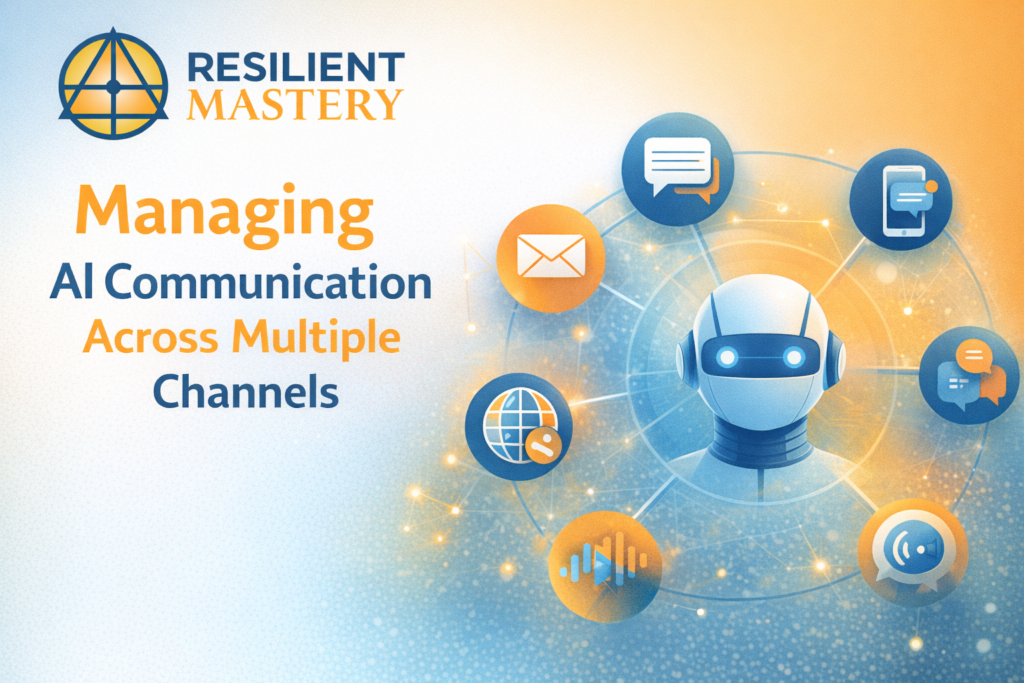
Modern businesses no longer communicate through just one platform. Customers reach out via websites, social media, email, messaging apps, and more. Managing all these channels effectively can quickly become complex—but this is where AI-powered communication systems make a real difference.
The Challenge of Multi-Channel Communication
Each platform has its own format, audience behavior, and response expectations. A customer might send a message on Facebook, follow up via email, and expect a quick reply on live chat—all within a short time.
Without a structured system, businesses risk:
- Missing messages
- Delayed responses
- Inconsistent communication
- Poor customer experience
Handling multiple channels manually often leads to confusion and inefficiency.
How AI Simplifies Multi-Channel Management
AI communication systems centralize conversations from different platforms into one unified system. This allows teams to manage all interactions from a single dashboard instead of switching between multiple tools.
AI can:
- Automatically respond to common queries
- Route messages to the right department
- Prioritize urgent conversations
- Maintain consistent tone and messaging
This creates a smoother, more organized communication flow.
Ensuring Consistency Across Platforms
One of the biggest challenges in multi-channel communication is maintaining a consistent brand voice. AI helps standardize responses so that customers receive the same quality of communication, regardless of the platform they use.
Consistency builds trust. When customers get clear and uniform responses everywhere, it strengthens your brand identity.
Real-Time Engagement at Scale
Customers expect fast responses no matter where they contact you. AI enables real-time engagement across all channels simultaneously. Whether it’s a website chat or a social media message, responses can be instant.
This level of responsiveness is difficult to achieve manually, especially as message volume increases.
Smart Routing and Personalization
AI doesn’t just respond—it understands context. It can analyze customer intent and route messages to the appropriate team or provide personalized replies based on past interactions.
This ensures that customers feel heard and valued, rather than receiving generic responses.
Data-Driven Insights
Managing multiple channels also means collecting valuable data. AI systems track conversations, response times, and customer behavior across platforms.
These insights help businesses:
- Identify common customer issues
- Improve response strategies
- Optimize communication workflows
- Make informed business decisions
Reducing Team Overload
Instead of juggling multiple platforms, teams can rely on AI to handle repetitive and high-volume interactions. This reduces stress and allows team members to focus on complex or high-priority tasks.
The result is a more efficient and productive team.
Best Practices for Multi-Channel AI Communication
To get the most out of AI systems:
Monitor performance and improve continuously
Integrate all communication channels into one platform
Keep responses clear and human-like
Regularly update AI training data
AI communication systems help centralize these interactions and ensure that inquiries are organized and addressed efficiently.
This allows businesses to maintain consistent communication even as customer demand increases.
Reducing Missed Opportunities
Missed calls and delayed responses often represent lost opportunities.
When customers cannot reach a business or receive timely responses, they frequently choose another provider.
AI communication systems help reduce these missed opportunities by responding to inquiries even when staff members are unavailable.
For example, AI voice agents can answer calls, gather basic information, and guide customers through scheduling processes.
This ensures that potential leads are captured rather than lost.
Improving Operational Consistency
Consistency is an important factor in delivering strong customer experiences.
When communication processes rely entirely on manual effort, responses can vary depending on staff availability, workload, or time of day.
AI communication systems help create more consistent customer experiences by following structured workflows and response patterns.
Customers receive clear information, scheduling assistance, and follow-up communication in a predictable and reliable manner.
Supporting Business Growth
As businesses grow, communication demands increase.
More customers often means:
• more calls
• more inquiries
• more scheduling requests
• more follow-up communication
Without strong systems in place, these increases can place significant pressure on teams.
AI communication tools help businesses scale their communication infrastructure, allowing them to manage higher inquiry volumes without dramatically increasing administrative workload. Larne More LinkedIn
Integrating With Modern Business Systems
Many AI communication platforms integrate with other operational tools such as:
• CRM systems
• scheduling software
• marketing automation platforms
• messaging services
These integrations allow customer information to flow smoothly between systems, helping businesses maintain organized records and consistent communication.
This integration supports more efficient workflows across the organization.
A Strategic Shift Toward Intelligent Operations
Adopting AI communication systems represents more than simply adding new technology.
For many businesses, it reflects a broader shift toward building intelligent operational systems that support long-term efficiency and growth.
By combining human expertise with automation technology, organizations can create communication systems that are both responsive and scalable.
Final Thoughts
Modern businesses operate in an environment where responsiveness and organization are increasingly important.
AI communication systems provide tools that help companies manage inquiries efficiently, support their teams, and maintain consistent customer experiences.
For businesses looking to improve communication responsiveness and operational efficiency, exploring AI-powered solutions can be an important step forward.
To learn more about communication automation systems designed to support growing businesses, visit: More