Imagine running a business that grows, scales, and generates revenue—even when you’re not actively working.
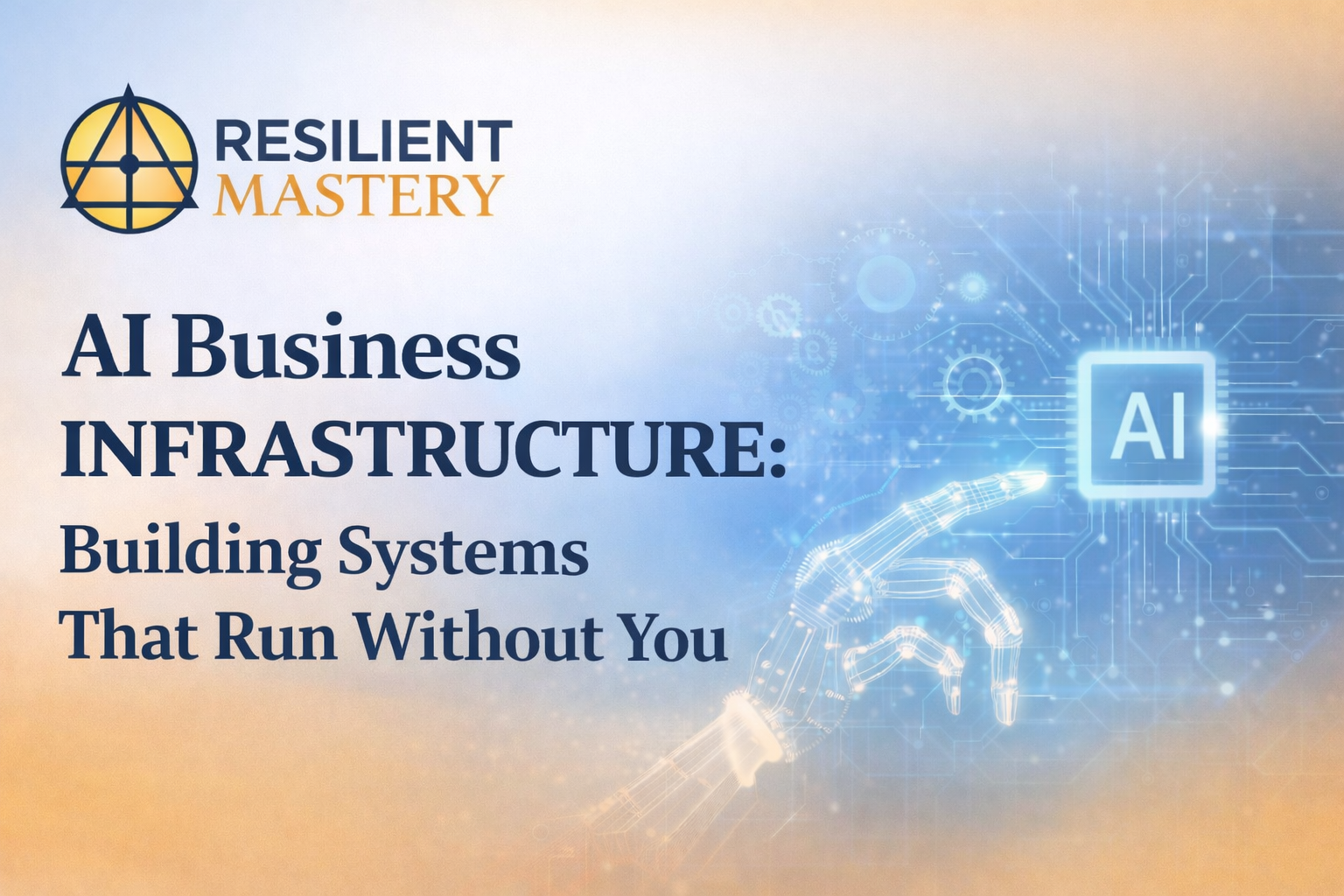
This is no longer a futuristic idea. With the rise of AI business infrastructure, companies are transforming how they operate by replacing manual tasks with intelligent systems.
Most businesses today are stuck in outdated models—dependent on human effort, constant supervision, and inefficient workflows. As demand grows, so does complexity. And eventually, growth becomes unsustainable.
This is where AI-powered automation changes everything.
By building smart systems, businesses can automate lead generation, customer communication, operations, and decision-making—creating a self-running, scalable business model.
Table of Contents
- What Is AI Business Infrastructure?
- Why Traditional Business Models No Longer Scale
- Core Components of AI Business Infrastructure
- Step-by-Step Guide to Building AI Systems
- Best AI Tools for Automation
- Real-World Use Cases
- Common Mistakes to Avoid
- The Future of AI-Driven Businesses
- How to Transition to Automation
- FAQs
What Is AI Business Infrastructure?
AI business infrastructure is the foundation of a modern, scalable business. It consists of interconnected tools, workflows, and systems powered by artificial intelligence that automate operations.
Instead of relying on manual input, businesses create systems that:
- Capture and qualify leads automatically
- Respond to customer inquiries instantly
- Execute marketing campaigns on autopilot
- Analyze performance data in real time
Think of it as a digital ecosystem where every part of your business communicates and operates seamlessly.
This approach allows businesses to scale without increasing workload—something traditional models fail to achieve.
Why Traditional Business Models No Longer Scale
Traditional businesses are built on linear growth:
- More customers = more work
- More work = more hiring
- More hiring = higher costs
This model creates friction and limits scalability.
AI-driven businesses operate differently:
- More customers = more automation
- More automation = higher efficiency
- Higher efficiency = scalable growth
In today’s competitive landscape, businesses that fail to adopt automation risk falling behind.
Core Components of AI Business Infrastructure
1. Lead Generation Systems
AI-powered funnels capture, qualify, and segment leads automatically.
2. Communication Automation
Chatbots and AI assistants handle conversations 24/7.
3. Sales Systems
Automated pipelines nurture leads and drive conversions.
4. Operations Workflows
Backend systems ensure smooth execution of tasks and processes.
5. Data Intelligence
AI analyzes performance data and provides actionable insights.
Together, these components form a powerful, self-sustaining business system.
Step-by-Step Guide to Building AI Systems
Step 1: Audit Your Business
Identify repetitive and time-consuming tasks.
Step 2: Map Processes
Understand how work flows through your business.
Step 3: Select Tools
Choose AI tools that align with your goals.
Step 4: Automate Gradually
Start with one system and expand over time.
Step 5: Optimize Continuously
Improve systems based on data and performance.
Best AI Tools for Automation
- CRM platforms for managing leads
- Email automation tools
- AI chatbots for customer support
- Workflow automation platforms
- Analytics and reporting tools
The key is integration—your tools should work together seamlessly.
Real-World Use Cases
Businesses are already using AI infrastructure to:
- Generate leads automatically
- Run marketing campaigns on autopilot
- Provide instant customer support
- Streamline internal operations
Result: Increased efficiency, lower costs, and higher revenue.
Common Mistakes to Avoid
- Trying to automate everything at once
- Using too many disconnected tools
- Ignoring user experience
- Failing to monitor performance
Automation should simplify—not complicate—your business.
The Future of AI-Driven Businesses
The Future of AI-Driven Businesses
Artificial Intelligence is no longer just a trend—it’s becoming the backbone of modern business. From automating daily operations to predicting customer behavior, AI is reshaping how companies operate, compete, and grow. The future belongs to businesses that don’t just use AI, but build their entire infrastructure around it.
What Are AI-Driven Businesses?
AI-driven businesses rely on intelligent systems to make decisions, automate processes, and optimize performance. Instead of manual guesswork, these businesses use data and algorithms to:
- Analyze customer behavior
- Automate marketing and sales
- Improve customer service
- Optimize operations
- Predict future trends
In simple terms, AI becomes the “brain” behind the business.
Why AI-Driven Businesses Are the Future
1. Smarter Decision-Making
AI can process massive amounts of data in seconds, helping businesses make accurate, data-backed decisions.
2. Automation at Scale
Repetitive tasks like emails, customer support, and reporting can be fully automated, saving time and resources.
3. Personalization Like Never Before
AI enables hyper-personalized experiences, increasing customer satisfaction and conversions.
4. Competitive Advantage
Businesses using AI move faster, adapt quicker, and outperform competitors still relying on traditional methods.
Key Areas Where AI Is Transforming Business
1. Marketing Automation
AI tools can create targeted campaigns, analyze performance, and optimize ads in real time.
2. Customer Support
Chatbots and AI assistants provide instant responses, improving customer experience 24/7.
3. Sales Optimization
AI predicts which leads are most likely to convert, helping businesses focus on high-value opportunities.
4. Operations & Workflow
From inventory management to task automation, AI streamlines operations for maximum efficiency.
5. Content Creation
AI can generate blog posts, social media content, and even design ideas, reducing workload.
How to Prepare for an AI-Driven Future
Start with Data
AI depends on data. Begin collecting and organizing your business data effectively.
Adopt the Right Tools
Choose AI-powered platforms that align with your business goals.
Train Your Team
Ensure your team understands how to work with AI systems instead of resisting them.
Focus on Strategy, Not Just Tools
AI is powerful, but without a clear strategy, it won’t deliver results.
Challenges to Consider
- Initial setup can be complex
- Requires continuous monitoring and updates
- Data privacy and security concerns
- Over-reliance on automation without human oversight
The Human + AI Balance
Despite all the advancements, AI won’t replace humans—it will enhance them. The most successful businesses will combine human creativity with AI efficiency. Strategy, empathy, and innovation still require a human touch.
Final Thoughts
The future of AI-driven businesses is not about replacing people—it’s about empowering them. Companies that adopt AI early will not only survive but thrive in an increasingly competitive landscape.
Now is the time to act. The question isn’t whether AI will shape the future—it’s whether your business will be part of it.
The future belongs to businesses that are:
- System-driven
- Data-powered
- AI-enabled
Those who adopt early will dominate their markets.
How to Transition to Automation
- Start small
- Train your team
- Measure results
- Scale gradually
How to Transition to Automation
Moving to automation doesn’t have to be complicated. Start small—identify repetitive tasks, choose the right tools, and build simple workflows that save time and reduce manual effort. As your systems grow, your business becomes faster, smarter, and more scalable.
Automation isn’t about replacing people—it’s about freeing your time to focus on strategy, growth, and creativity.
Learn more here: LinkedIn
Transformation is a process—but the results are exponential.
FAQs
What is AI business infrastructure?
AI business infrastructure is a system of tools, workflows, and automation technologies that allow a business to operate with minimal manual effort.
How can AI automate a business?
AI automates tasks like lead generation, customer support, and marketing through intelligent workflows.
What are the benefits of AI business systems?
They improve efficiency, reduce costs, and enable scalable growth.
Can small businesses use AI automation?
Yes, AI tools are accessible and scalable for businesses of all sizes.
What tools are used for AI automation?
Tools include CRMs, chatbots, email automation platforms, and workflow systems.
Ready to Build a Self-Running Business?
Ready to Build a Self-Running Business?
In today’s fast-moving digital world, the idea of a business that runs without constant supervision is no longer a dream—it’s a strategy. With the rise of AI, automation tools, and smart systems, entrepreneurs can now build businesses that operate efficiently, scale faster, and free up valuable time.
But let’s be clear: a “self-running business” doesn’t mean zero effort. It means building the right infrastructure so your business can function smoothly—even when you’re not actively involved every minute.
What Is a Self-Running Business?
A self-running business is powered by systems, not constant manual work. Instead of relying on you to manage every task, it uses automation, processes, and technology to handle operations like:
- Customer communication
- Lead generation
- Sales funnels
- Order processing
- Marketing campaigns
- Data tracking and reporting
The goal is simple: reduce dependency on human intervention and increase efficiency.
Why You Should Build One
1. Freedom of Time
You’re no longer tied to your business 24/7. Systems handle repetitive work while you focus on growth or personal life.
2. Scalability
Automated systems allow your business to grow without a proportional increase in workload.
3. Consistency
Machines don’t forget. Your processes run the same way every time, reducing errors.
4. Cost Efficiency
Automation can reduce the need for large teams, cutting operational costs over time.
The Core Components of a Self-Running Business
To make your business run without you, you need to build a strong foundation:
1. Automated Lead Generation System
Use tools like SEO, paid ads, and landing pages to attract and capture leads automatically.
2. Smart Sales Funnel
Design a funnel that nurtures leads through email sequences, retargeting ads, and personalized offers.
3. AI-Powered Customer Support
Chatbots and automated responses can handle common queries 24/7, improving user experience.
4. Workflow Automation
From onboarding clients to processing orders, workflows should be streamlined using automation tools.
5. Data & Analytics System
Track performance, customer behavior, and sales metrics to make informed decisions without manual tracking.
Steps to Get Started
Step 1: Identify Repetitive Tasks
List down everything you do daily or weekly. These are your first automation opportunities.
Step 2: Choose the Right Tools
Select platforms that integrate well and can automate multiple tasks from one place.
Step 3: Build Standard Operating Procedures (SOPs)
Document how tasks should be done so systems and team members can follow them easily.
Step 4: Implement Automation Gradually
Start small. Automate one process at a time to avoid overwhelm.
Step 5: Monitor and Optimize
Even automated systems need regular review and improvement.
Common Mistakes to Avoid
- Trying to automate everything at once
- Choosing too many disconnected tools
- Ignoring customer experience
- Not testing systems before full launch
- Lack of clear processes
The Future Is Automated
Businesses that embrace automation and AI today are the ones that will dominate tomorrow. A self-running business doesn’t just save time—it creates opportunities for growth, innovation, and freedom.
Final Thoughts
Building a self-running business is about working smarter, not harder. With the right systems in place, you can create a business that operates efficiently, grows consistently, and gives you the flexibility you’ve always wanted.
The real question is—are you ready to stop running your business and start building systems that run it for you?
If you want to implement AI-powered systems and scale your business efficiently, now is the time.
Work with Resilient Mastery to build intelligent, scalable systems tailored to your growth.
Get started today and transform your business into a self-running machine.