Introduction: Why “AI Agents” Are Suddenly Everywhere
Artificial Intelligence is evolving quickly, and one term that has begun appearing everywhere in business conversations is AI agent.
You may have seen the phrase used when discussing automation tools, chat systems, customer service technology, or marketing platforms.
But for many business owners, the term still feels vague.
What exactly is an AI agent?
Is it a chatbot?
Is it automation software?
Is it something more advanced?
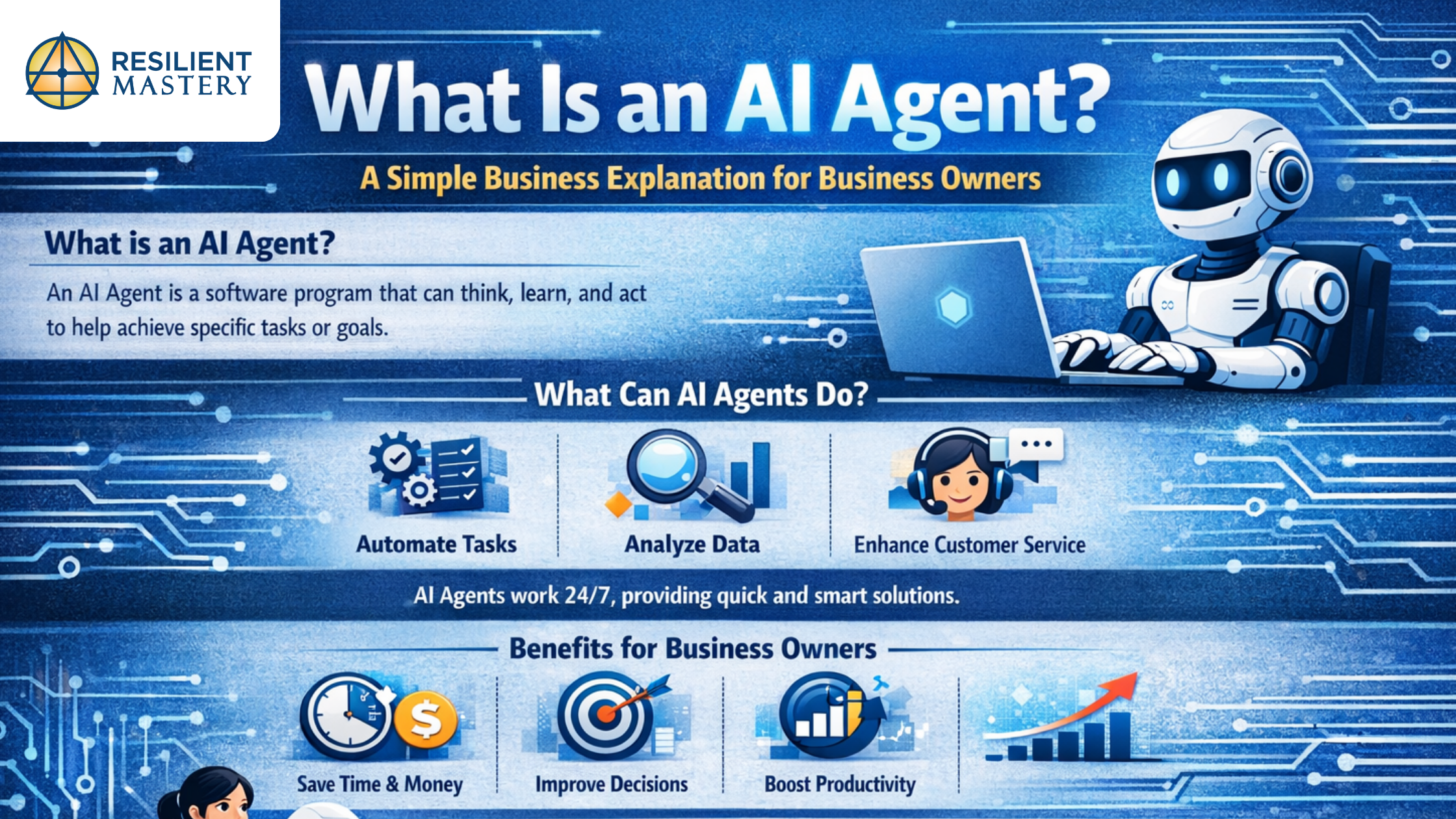
The reality is that AI agents represent a new generation of intelligent systems designed to perform tasks, interact with people, and support business operations automatically.
For businesses, this technology is becoming one of the most powerful tools available for improving responsiveness, reducing manual workload, and capturing more opportunities.
To understand why AI agents are gaining so much attention, we first need to look at how modern business communication actually works.
The Communication Problem Most Businesses Face
Modern businesses communicate with customers across many channels:
• phone calls
• website inquiries
• online chat
• email
• social media messages
• appointment scheduling requests
Each of these communication channels creates opportunities for businesses to connect with potential customers.
But managing them all consistently can be difficult.
Teams often struggle to respond quickly to every message or call.
This leads to common operational problems such as:
• missed calls
• delayed responses
• forgotten follow-ups
• inconsistent scheduling processes
We discussed one of these issues in detail in our previous article:
AI for Small Businesses: Practical Automation That Saves Time
In that article, we explained how small operational bottlenecks can quietly cost businesses hours of time every week.
AI agents are designed to solve exactly these kinds of problems.
What an AI Agent Actually Is
At its simplest, an AI agent is a software system capable of performing tasks and interacting with users automatically.
Unlike traditional software tools that simply execute commands, AI agents can understand context, interpret requests, and generate responses.
This allows them to behave more like digital assistants than simple automation scripts.
An AI agent can receive input, process information, and respond intelligently based on what it understands.
For example, when a customer sends a message asking about appointment availability, an AI agent can:
• understand the question
• check scheduling availability
• offer appointment times
• confirm the booking
• send reminders
All of this can happen automatically without requiring a staff member to manually respond.
AI Agents vs Traditional Automation
Businesses have used automation tools for years.
Examples include:
• automated email responses
• CRM workflow triggers
• scheduling software
While these tools are helpful, they often operate using fixed rules.
For example:
“If someone fills out a form, send this email.”
AI agents go much further.
Instead of following rigid instructions, AI agents can interpret the meaning of a message and respond appropriately.
This allows them to handle more complex conversations and customer interactions.
As a result, AI agents are capable of supporting real business communication in ways traditional automation cannot.
Common Types of AI Agents Used in Business
AI agents are used in many different ways depending on the needs of a business.
Below are some of the most common applications.
AI Receptionists
One of the most powerful uses of AI agents is acting as a digital receptionist.
AI receptionists can answer incoming phone calls and assist customers automatically.
They can:
• greet callers
• answer common questions
• collect customer information
• schedule appointments
• transfer complex inquiries to staff
This ensures businesses never miss important inquiries.
Messaging and Chat Agents
Many businesses receive customer inquiries through website chat or messaging platforms.
AI chat agents can respond instantly to these messages and guide customers toward the next step.
For example, they may:
• answer service questions
• provide pricing information
• collect contact details
• direct customers to scheduling options
Instant response dramatically improves the customer experience.
Appointment Scheduling Agents
Scheduling appointments manually often requires multiple messages between the customer and the business.
AI agents can automate this process entirely.
Customers can simply select an available time slot and confirm their appointment automatically.
Confirmation messages and reminders can then be sent without manual effort.
Lead Qualification Agents
Not every inquiry represents the same level of opportunity.
Some customers are ready to buy immediately, while others are still gathering information.
AI agents can ask simple qualifying questions to determine what a prospect needs and guide them toward the appropriate next step.
This helps businesses focus their time on the most valuable opportunities.
Real-World Examples of AI Agents in Action
To understand the practical impact of AI agents, it helps to look at how businesses use them in real scenarios.
Example: A Medical Practice
Medical offices receive numerous calls every day.
When staff members are assisting patients, many calls go unanswered.
AI receptionists can answer these calls automatically and help patients schedule appointments immediately.
This improves accessibility while reducing administrative workload.
Example: A Home Services Business
Service companies often receive inquiries from homeowners outside normal working hours.
Without automation, these inquiries may sit unanswered until the next business day.
AI agents can respond instantly, collect job details, and schedule consultations automatically.
Example: A Consulting Firm
Consultants often spend significant time coordinating meetings and responding to basic inquiries.
AI scheduling agents allow prospects to book consultations instantly, eliminating scheduling friction.
AI Agents and Human Communication
Some people worry that AI systems may replace human interaction.
In practice, the most effective systems combine automation with human expertise.
AI agents handle repetitive communication tasks such as:
• answering common questions
• scheduling appointments
• collecting customer information
Human team members handle complex conversations and strategic discussions.
This balance allows businesses to operate more efficiently without sacrificing personal relationships.
We explore this concept further in another article:
AI vs Chatbots: What’s the Difference?
Understanding how different automation tools work together helps businesses build stronger communication systems.
The Future of Business Communication
Customer expectations continue to evolve.
People expect fast responses, convenient scheduling, and clear communication when interacting with businesses.
AI agents help companies meet these expectations without increasing workload.
Businesses that adopt these systems early often experience significant improvements in efficiency and responsiveness.
As technology continues to improve, AI agents will likely become a standard part of business infrastructure.
Ready to See How AI Agents Could Work in Your Business?
Every business experiences communication challenges.
Some struggle with missed calls.
Others lose leads because follow-up is inconsistent.
Many simply don’t have the time to respond quickly to every inquiry.
That’s where intelligent automation systems can make a major difference.
At Resilient Mastery, we help businesses implement AI-powered communication systems that:
• capture leads instantly
• automate follow-up
• answer customer inquiries automatically
• schedule appointments without manual work
If you’d like to explore how these systems could work in your business, the best first step is to schedule a short strategy workshop.
During this session we’ll review your current communication flow and identify opportunities to improve efficiency and capture more leads.
Schedule your Automation Strategy Workshop here:
👉 INSERT WORKSHOP LINK
Conclusion
AI agents represent one of the most powerful new tools available to modern businesses.
By automating communication tasks and operational workflows, these systems allow companies to respond faster, reduce manual workload, and improve customer experiences.
Rather than replacing people, AI agents help teams focus on the interactions that matter most.
Businesses that embrace intelligent automation today will be better positioned to grow and compete in an increasingly fast-moving marketplace.